






Disclosure: This site may earn a small commission if you buy products from categories mentioned below, at no extra cost to you. Our content is for education and does not replace medical advice.
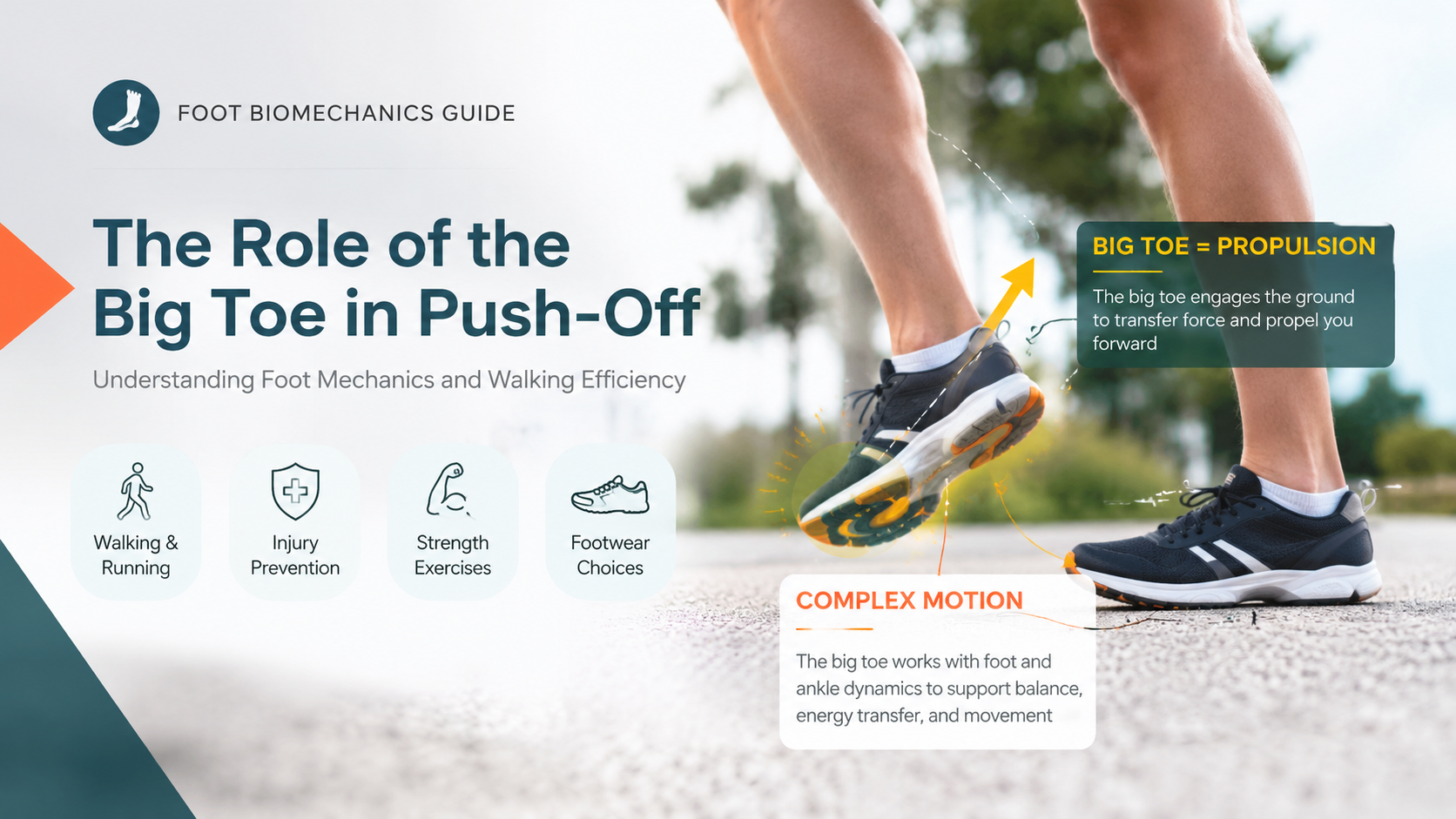
Every step you take ends with a quiet but powerful event: the moment your foot leaves the ground. That final burst of propulsion is called push-off, and the star of the show is the smallest-looking hero of the lower body, the big toe (known medically as the hallux). Understanding the role of the big toe in push-off can help you walk with less pain, run more efficiently, choose better shoes, and avoid common forefoot injuries.
What Is Push-Off in Walking and Running?
Push-off, also called toe-off or the propulsion phase, is the last part of the stance phase of gait. Your heel lifts, your body weight rolls forward over the ball of the foot, and the foot pushes backward against the ground to drive the body forward. Without an effective push-off, your hips and thigh muscles must work harder to move you, which wastes energy and increases strain elsewhere.
Anatomy of the Big Toe: Small Joint, Big Job
The big toe is made of two bones (phalanges) and connects to the first metatarsal at the first metatarsophalangeal (MTP) joint, the joint at the ball of the foot. Several structures make it uniquely strong:
- Sesamoid bones: Two tiny bones under the first metatarsal head act like pulleys and absorb pressure during push-off.
- Flexor hallucis longus (FHL): A strong muscle that runs from the calf to the tip of the toe and presses the toe into the ground.
- Flexor hallucis brevis: Stabilizes the joint and works with the sesamoids.
- Abductor and adductor hallucis: Keep the toe aligned and help support the arch.
- Extensor hallucis longus: Lifts the toe and helps position it before the foot lands.
- Plantar fascia: A thick band of tissue under the foot that attaches to the heel and to the base of the toes.
During normal gait the big toe carries far more load than any of the other four toes, and it is a major contact point of the forefoot at toe-off.
The Windlass Mechanism: How the Big Toe Stiffens the Foot
The most important idea behind the big toe’s role in push-off is the windlass mechanism. A windlass is a simple machine that winds a rope around a drum to tighten it. In your foot, the plantar fascia acts as the rope and the first MTP joint acts as the drum.
When your heel rises and the big toe bends upward (dorsiflexion), the plantar fascia is pulled tight around the head of the first metatarsal. This does three useful things at once:
- It raises the arch and shortens the foot.
- It turns a flexible, shock-absorbing foot into a rigid lever.
- It lets the calf muscles transfer force efficiently to the ground.
How Much Big Toe Motion Do You Need?
Research on gait generally shows that the first MTP joint needs about 60 to 65 degrees of upward bend for normal walking, and more for running, sprinting, hill climbing and squatting. If the joint cannot bend that far, the body finds a way around it, and that workaround often causes trouble elsewhere.
What Happens When the Big Toe Doesn’t Work Properly?
When the big toe is stiff, painful or weak, push-off becomes inefficient. Common compensations include walking on the outside edge of the foot, turning the foot outward, shortening your stride, or pushing off with the lesser toes. Over time this can contribute to:
- Hallux rigidus: Arthritis of the first MTP joint that causes stiffness, pain and bone spurs on top of the joint.
- Hallux valgus (bunions): The big toe drifts toward the other toes, weakening its ability to push off.
- Turf toe: A sprain of the ligaments under the joint, common in athletes who push off hard on firm surfaces.
- Sesamoiditis: Painful inflammation of the sesamoid bones under the ball of the foot.
- Plantar fasciitis and Achilles problems: A weak windlass effect places extra strain on the fascia and calf complex.
- Metatarsalgia and shin, knee or hip pain: Pressure shifts to the lesser toes or up the chain.
Warning Signs You May Have a Big Toe Push-Off Problem
- Pain or stiffness at the ball of the big toe when you walk or run
- Difficulty rising onto your toes or doing a single-leg calf raise
- Worn-out areas on the outside of your shoe soles
- A visible bump or a big toe that leans inward
- Pain when going up stairs or hills, or when squatting
- Calluses under the second toe joint
A Simple Self-Check: Big Toe Extension Test
Sit with your foot relaxed and gently lift your big toe toward your shin with your hand. Healthy mobility is roughly 60 degrees or more. A quick standing version, often called the Jack’s test, involves lifting the big toe while standing and watching whether the arch rises. If the arch does not rise or the joint feels blocked or painful, a podiatrist or physical therapist can assess it properly.
Exercises to Strengthen and Mobilize the Big Toe
Always stay within a comfortable range and stop if you feel sharp pain.
- Short foot exercise: Slowly draw the ball of your foot toward your heel without curling your toes. Hold 5 seconds, repeat 10 times.
- Big toe press: Press only your big toe into the floor while keeping the other toes light. Hold 5 seconds, 10 repetitions.
- Toe yoga (piano toes): Lift only the big toe, then lower it while lifting the other four. Do 10 to 15 rounds.
- Towel curls and marble pickups: Strengthen the toe flexors with 2 sets of 10.
- Calf raises with big toe emphasis: Rise slowly onto the ball of the foot, pushing through the big toe. Do 3 sets of 10 to 12.
- Passive big toe stretch: Kneel with toes tucked under, or gently bend the toe up by hand and hold 30 seconds.
- Single-leg balance: Balance for 30 seconds while gripping the floor with the big toe.
Footwear and Products That Support Big Toe Function
The right gear will not replace strength and mobility, but it can reduce pain and improve comfort. These are the product categories most people explore:
- Wide toe box shoes: Give the big toe room to spread and push straight. They suit bunion-prone feet.
- Stiff-soled or rocker-sole shoes: Reduce the bending demand on a painful or arthritic joint and make rolling forward easier.
- Carbon-plated running shoes: A stiff plate with a curved sole can lower stress on the forefoot joints during fast running.
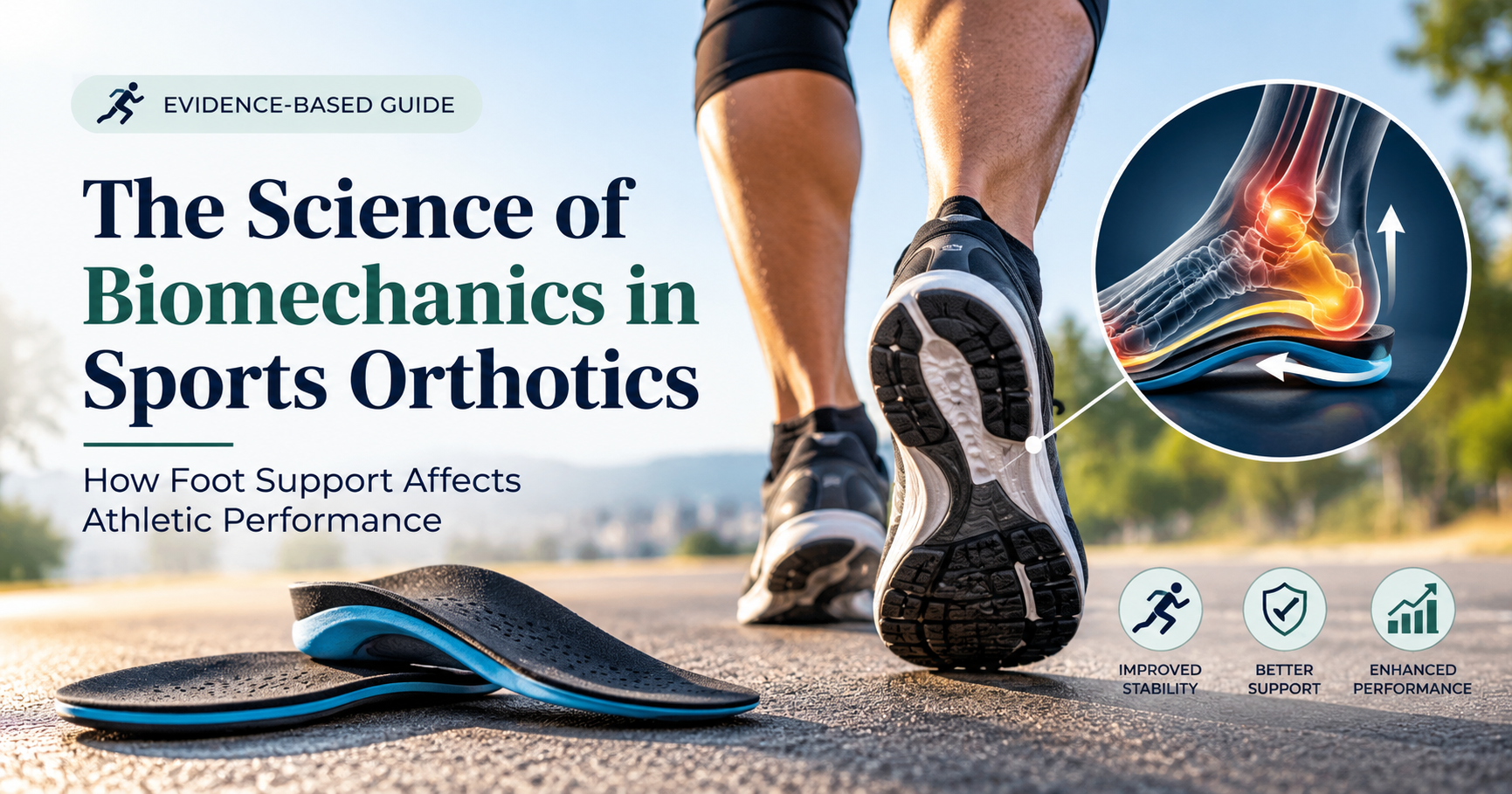
- Morton’s extension or rigid insoles: Limit motion at the first MTP joint for hallux rigidus or turf toe.
- Toe spacers and separators: Can help realign the big toe and ease mild bunion discomfort.
- Metatarsal pads and cushioned insoles: Offload sesamoid and ball-of-foot pressure.
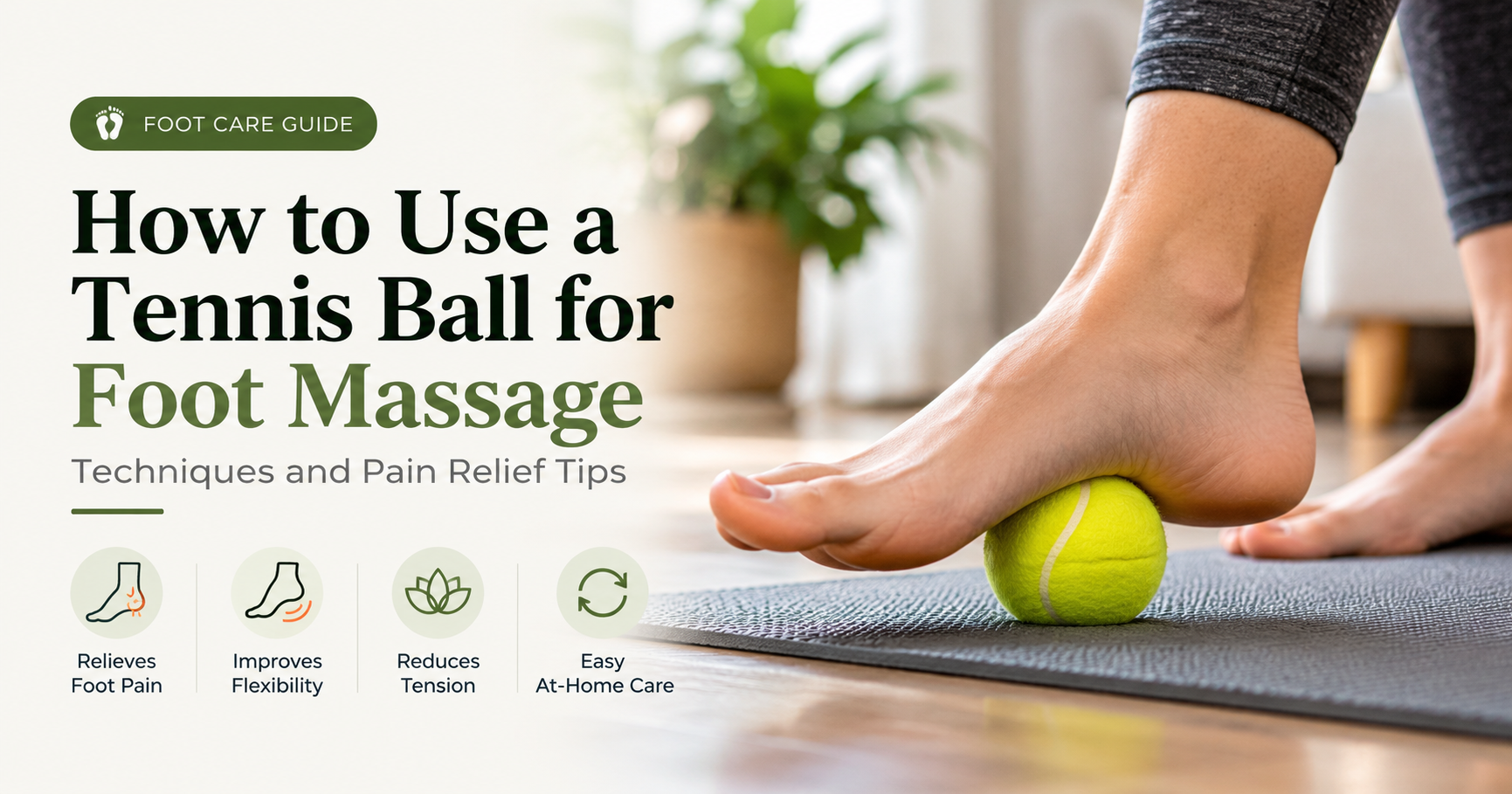
- Foot massage balls and mobility tools: Useful for plantar fascia and calf recovery.
When shopping, check that the shoe flexes where your foot flexes (at the ball, not mid-arch), that there is about a thumb’s width of space in front of the longest toe, and that the heel feels secure.
Big Toe Push-Off for Runners, Walkers and Athletes
Walkers: A strong big toe gives a smoother roll-through and a longer, more comfortable stride, which matters especially for older adults and anyone on their feet all day.
Runners: Faster speeds and hills demand more joint motion and more calf force. Gradual mileage increases, calf strengthening and appropriate shoes protect the joint.
Court and field athletes: Cutting and sprinting on firm surfaces raises turf toe risk. Stiffer forefoot support and good surface choice help.
When to See a Professional
See a podiatrist, orthopedic specialist or physical therapist if you have persistent pain lasting more than a couple of weeks, swelling, a toe that locks or cannot bend, numbness, a rapidly worsening bunion, or pain after a sudden injury. Early treatment often avoids more invasive options later.
Frequently Asked Questions
Why is the big toe so important for walking?
It tightens the plantar fascia through the windlass mechanism, stiffens the foot, and delivers the final push that drives the body forward.
Can you walk without a big toe?
Yes, but people lose propulsion and balance, take shorter steps and tire sooner. Rehabilitation and special footwear can help.
Does a bunion affect push-off?
Often, yes. As the big toe drifts sideways, it cannot bend upward or press down as effectively, so the lesser toes take more load.
Can big toe exercises really help?
For many people, yes. Strengthening and mobility work can improve foot control, arch support and comfort, although severe arthritis or structural deformity may need clinical treatment.
What shoes are best for a stiff big toe?
Many people with stiffness find relief in shoes with a rigid or rocker sole and a roomy toe box, but the best choice depends on your diagnosis, so ask a foot specialist.
Final Thoughts
The big toe is the engine room of push-off. Through the windlass mechanism it locks the arch, creates a rigid lever and lets your calf muscles power each step. Keeping it mobile, strong and well supported protects the entire kinetic chain from the foot to the hip. Pay attention to early warning signs, train the toe regularly, and choose footwear that works with your foot rather than against it. Your next step will thank you.