





After a long day on your feet, few things feel better than a good foot massage. The problem is that regular massages cost money and take time. The good news is that one of the cheapest tools you can find, a tennis ball, can give you real relief at home in just a few minutes.
In this complete guide, you will learn how to use a tennis ball for foot massage and relief, which areas to target, how much pressure is right, a simple routine you can follow every day, and the safety rules that keep you from making things worse.
Quick Answer
Sit in a chair, place a tennis ball under your bare foot, and roll it slowly from heel to toes using medium pressure for 2 to 5 minutes. Pause on tender spots for 20 to 30 seconds, breathe deeply, then switch feet. Do this once or twice a day.
Table of Contents
- Why a tennis ball works for foot pain
- Benefits of tennis ball foot massage
- What you need
- Know your foot zones
- Step-by-step technique
- Five tennis ball techniques for different problems
- 5-minute daily routine
- Pressure guide
- Tennis ball vs other massage tools
- Safety: who should avoid this
- Common mistakes
- Extra tips for lasting relief
- Frequently asked questions
Why a Tennis Ball Works for Foot Pain
Your foot contains 26 bones, more than 100 muscles, tendons and ligaments, and a thick band of tissue called the plantar fascia. This band runs from your heel to the base of your toes and supports your arch every time you stand, walk or run.
When the plantar fascia and the small muscles around it get tight, you feel it as heel pain, arch soreness or stiffness, especially with your first steps in the morning. Rolling a ball under the foot applies steady, targeted pressure. This technique is often called self-myofascial release. It may help to:
- Warm up and loosen tight tissue
- Improve blood flow to tired muscles
- Reduce the feeling of tension and stiffness
- Increase flexibility in the arch and toes
A tennis ball is a smart starting point because it is firm enough to work deep into the sole, yet softer than a lacrosse ball or a spiky massage ball. That makes it more forgiving for beginners and for sensitive feet.
Benefits of Tennis Ball Foot Massage
- Relief from sore arches and heels: Helpful after long hours of standing, walking or running.
- Less morning stiffness: A short roll before getting out of bed or after sitting for a long time can make the first steps easier.
- Better foot mobility: Regular rolling can help the foot feel looser and more flexible.
- Stress relief: The soles hold many nerve endings, so slow pressure often feels deeply relaxing.
- Very low cost: No appointment, no electricity and no special training.
- Portable: It fits in a gym bag, a desk drawer or a suitcase.
What You Need
- One standard tennis ball. A slightly worn ball is a bit softer, which is great if you are just starting out. A brand new one is firmer.
- A sturdy chair or a clear wall space nearby for balance.
- A non-slip floor or a yoga mat so the ball does not shoot away.
- Bare feet or thin socks. Shoes block the pressure.
- Optional: a small towel, since a rolled towel under the ball can steady it on slippery floors.
If you later want something firmer or more targeted, popular alternatives include a lacrosse ball, a spiky massage ball, a massage roller bottle or a frozen water bottle. Start with the tennis ball and upgrade only if it feels too light.
Know Your Foot Zones
Before you start rolling, it helps to know what you are working on. Focus mostly on the arch, then work gently into the ball of the foot and the heel.
Step-by-Step: How to Use a Tennis Ball for Foot Massage
Step 1: Get into a comfortable position
Sit upright in a chair with your knees bent at about 90 degrees and your back supported. Remove your shoes and socks, or wear thin socks if the floor is slippery.
Step 2: Place the ball under your foot
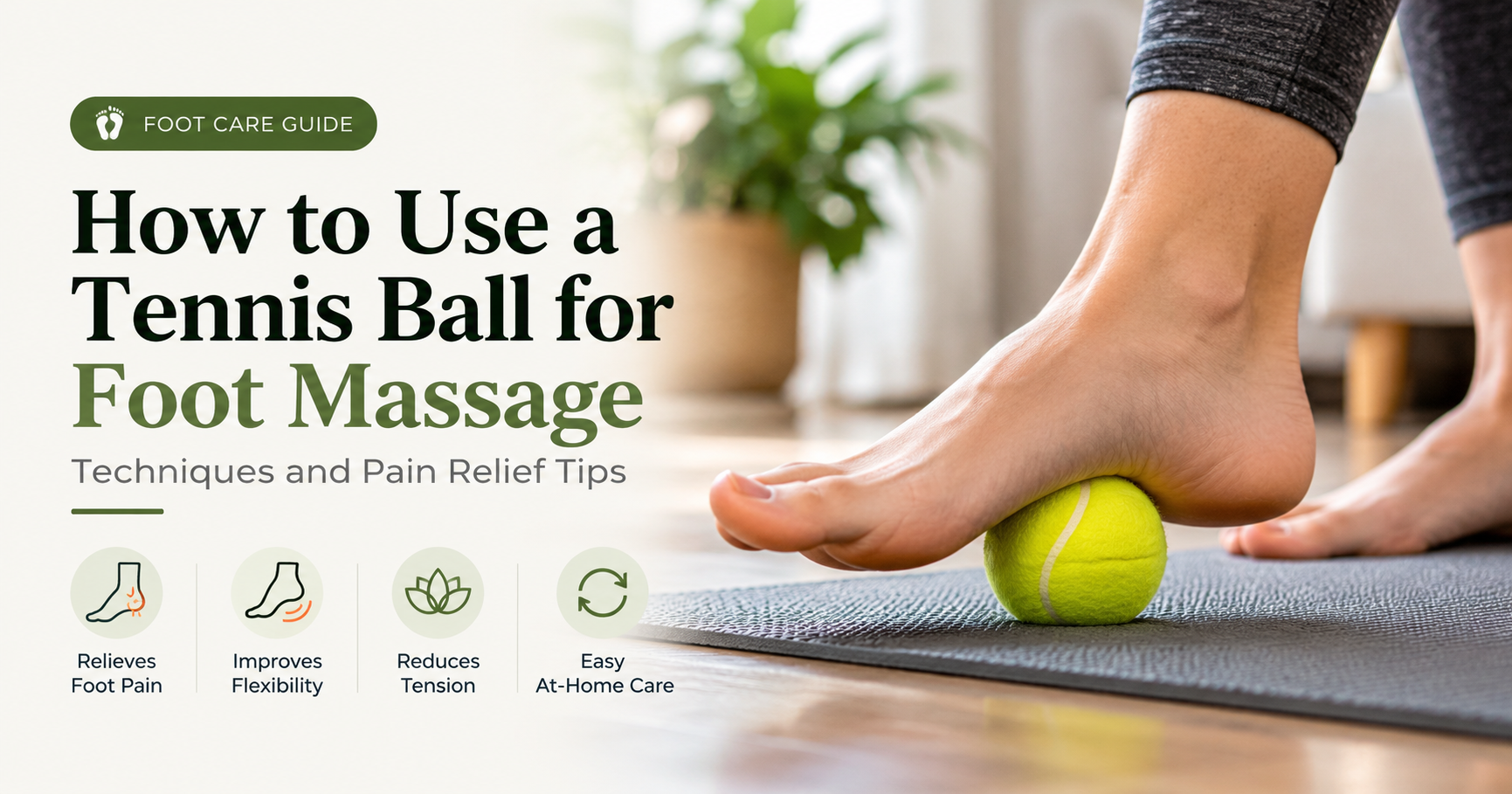
Put the tennis ball on the floor and rest the middle of your foot (the arch) on top of it. Keep your heel on the floor at first.
Step 3: Apply gentle pressure
Lean a little weight through your leg so you feel the ball pressing into the sole. Start light. You should feel a firm, dull pressure, never sharp or burning pain.
Step 4: Roll slowly from heel to toes
Slide the ball slowly forward and back along the length of your foot. Take about 5 seconds for each pass. Slow movement is much more effective than quick rubbing.
Step 5: Pause on tender spots
When you find a tight or sore area, stop rolling and hold the pressure there for 20 to 30 seconds. Breathe slowly. The tenderness usually eases as the tissue relaxes. If it does not, reduce the pressure instead of pushing harder.
Step 6: Switch feet
Spend 2 to 5 minutes on each foot. Afterward, stand up and walk around. Many people notice their foot feels warmer, looser and lighter.
Five Tennis Ball Techniques for Different Problems
1. Basic Arch Roll (for general tightness)
Roll the ball along the arch from the heel to the base of the toes. Do this for 1 to 2 minutes. This is the foundation of every foot massage routine.
2. Heel Press (for heel soreness)
Place the ball just in front of the heel bone. Use small forward and backward strokes, about 2 to 3 centimeters long. Avoid pressing directly on the bony point of the heel if it is very painful.
3. Ball-of-Foot Circles (for forefoot fatigue)
Move the ball under the padded area behind your toes and make slow circles. This helps if you wear heels, stand all day or run often.
4. Side-to-Side Cross Roll (for stubborn knots)
Instead of rolling heel to toe, roll the ball across the arch from the inner edge to the outer edge. This works the tissue from a different angle.
5. Standing Deep Press (for advanced users)
Stand next to a wall or sturdy counter for balance. Place the ball under your arch and slowly shift a little more body weight onto it. Hold for 20 seconds, then roll. Only try this once the seated version feels easy.
5-Minute Daily Routine
Short and regular beats long and rare. Follow this simple routine once in the morning and once in the evening.
| Time | What to do |
|---|---|
| 0:00 to 1:30 | Slow arch roll, heel to toes (right foot) |
| 1:30 to 2:00 | Hold pressure on the most tender spot |
| 2:00 to 2:30 | Circles under the ball of the foot |
| 2:30 to 5:00 | Repeat everything on the left foot |
Pressure Guide: How Hard Is Too Hard?
Many people press too hard and end up with a bruised, aching foot. Use this simple 1 to 10 scale.
| Level | What it feels like | Verdict |
|---|---|---|
| 1 to 3 | Light, barely noticeable | Good for warming up or very sore feet |
| 4 to 6 | Firm, “good hurt” | Ideal working range |
| 7 to 8 | Strong discomfort, you tense up | Too much, ease off |
| 9 to 10 | Sharp, burning or tingling | Stop immediately |
Tennis Ball vs Other Foot Massage Tools
| Tool | Firmness | Best for |
|---|---|---|
| Tennis ball | Medium-soft | Beginners, daily use, sensitive feet |
| Lacrosse ball | Very firm | Deep pressure, experienced users |
| Spiky massage ball | Firm with texture | Stimulating the sole, circulation feel |
| Frozen water bottle | Firm and cold | Heel pain with soreness after activity |
| Foam roller | Medium | Calves and larger muscles rather than feet |
Safety: Who Should Be Careful or Avoid This
Talk to a doctor first if you have:
- Diabetes or neuropathy (reduced feeling in the feet)
- Open wounds, blisters, infections or ulcers on the foot
- A suspected stress fracture or recent foot surgery
- Poor circulation or blood clot history
- Severe swelling, redness or warmth in the foot
Stop right away if you feel sharp pain, numbness, tingling or burning. Foot massage should feel like relief, not like injury.
Common Mistakes to Avoid
- Pressing too hard. More pain does not mean more benefit.
- Rolling too fast. Fast movement skips over tight areas and does little.
- Massaging the bony parts. Stay on the soft tissue of the sole.
- Doing too much on day one. Begin with 2 minutes per foot and build up.
- Ignoring the calves. Tight calves often add to arch and heel strain.
- Holding your breath. Slow breathing helps your muscles let go.
Extra Tips for Lasting Foot Relief
- Warm your feet first. A warm bath or warm towel makes tissue easier to work.
- Add a calf stretch. Stretch each calf for 30 seconds after rolling.
- Stretch your toes. Gently pull the toes back toward the shin for 15 to 20 seconds.
- Wear supportive shoes. Choose footwear with good arch support and cushioning, and replace worn-out pairs.
- Stay hydrated. Well-hydrated tissue tends to feel less tight.
- Be consistent. Most people feel a difference within one to two weeks of regular use.
- Mind your weight and activity. Increase walking or running time gradually to avoid overload.
When to See a Healthcare Professional
A tennis ball is a self-care tool, not a cure. See a doctor or physiotherapist if your pain lasts more than two to three weeks, gets worse, wakes you at night, or comes with swelling, numbness or difficulty walking. Persistent heel pain may be plantar fasciitis or another condition that needs a proper diagnosis.
Frequently Asked Questions
How long should I use a tennis ball on my foot?
Two to five minutes per foot, once or twice a day, is enough for most people. Beginners should start with about two minutes.
Can a tennis ball help with plantar fasciitis?
Many people find that gentle rolling eases the tightness linked to plantar fasciitis. Keep the pressure light to moderate and avoid pressing directly on a very painful heel spot. Ask a professional if the pain continues.
Should I roll my foot before or after exercise?
Both can work. A short roll before activity warms the foot up, and a longer, slower roll afterward helps it relax.
Is it normal to feel sore after rolling?
Mild soreness, similar to after a workout, can happen the first few times. Sharp or lasting pain is not normal, so reduce the pressure or take a break.
Can I do this while standing?
Yes, but sitting gives you better control. Move to standing only when the seated version feels comfortable, and hold onto a wall or counter for balance.
Is a tennis ball better than a lacrosse ball?
Neither is better for everyone. A tennis ball is gentler and better for beginners. A lacrosse ball is firmer and suits people who want deeper pressure.
Can I use a tennis ball if I have flat feet or high arches?
Yes. Just keep the pressure comfortable and pay attention to any pain. If you have a structural foot problem, supportive footwear and professional advice are also worth considering.
Final Thoughts
Learning how to use a tennis ball for foot massage and relief is one of the easiest and cheapest ways to look after your feet. Roll slowly, keep the pressure comfortable, focus on the arch, and make it a daily habit. In just five minutes a day, you can ease tension, feel lighter on your feet and be ready for whatever the day brings.
Grab a tennis ball, kick off your shoes and give your feet the attention they deserve.
Disclaimer: This article is for general information only and is not medical advice. Always consult a qualified healthcare professional about foot pain or medical conditions.