


Few fashion choices spark as much debate as high heels. They lengthen the leg, change posture and add instant polish to an outfit. Yet behind the glamour, there is a part of your body that quietly pays the price: the Achilles tendon. If you have ever felt tightness at the back of your ankle after a long day in heels, or a sharp ache the first thing in the morning, this guide explains what is really happening and what you can do about it.
In this complete, evidence-informed guide, you will learn how the Achilles tendon works, how high heels change the way it functions, which problems are most commonly linked to heel wearing, and how to protect yourself without giving up the shoes you love.
Key Takeaways
- High heels keep the ankle pointed downward, which holds the calf muscle and Achilles tendon in a shortened position for hours.
- Over time, regular heel wearing is associated with a tighter calf, a stiffer tendon and a higher chance of Achilles pain.
- The higher and thinner the heel, and the longer you wear it, the greater the strain.
- Block heels, lower heel heights, shoe rotation and daily calf stretching make a real difference.
- Persistent heel or ankle pain, swelling or a sudden “pop” needs professional medical attention.
Understanding the Achilles Tendon
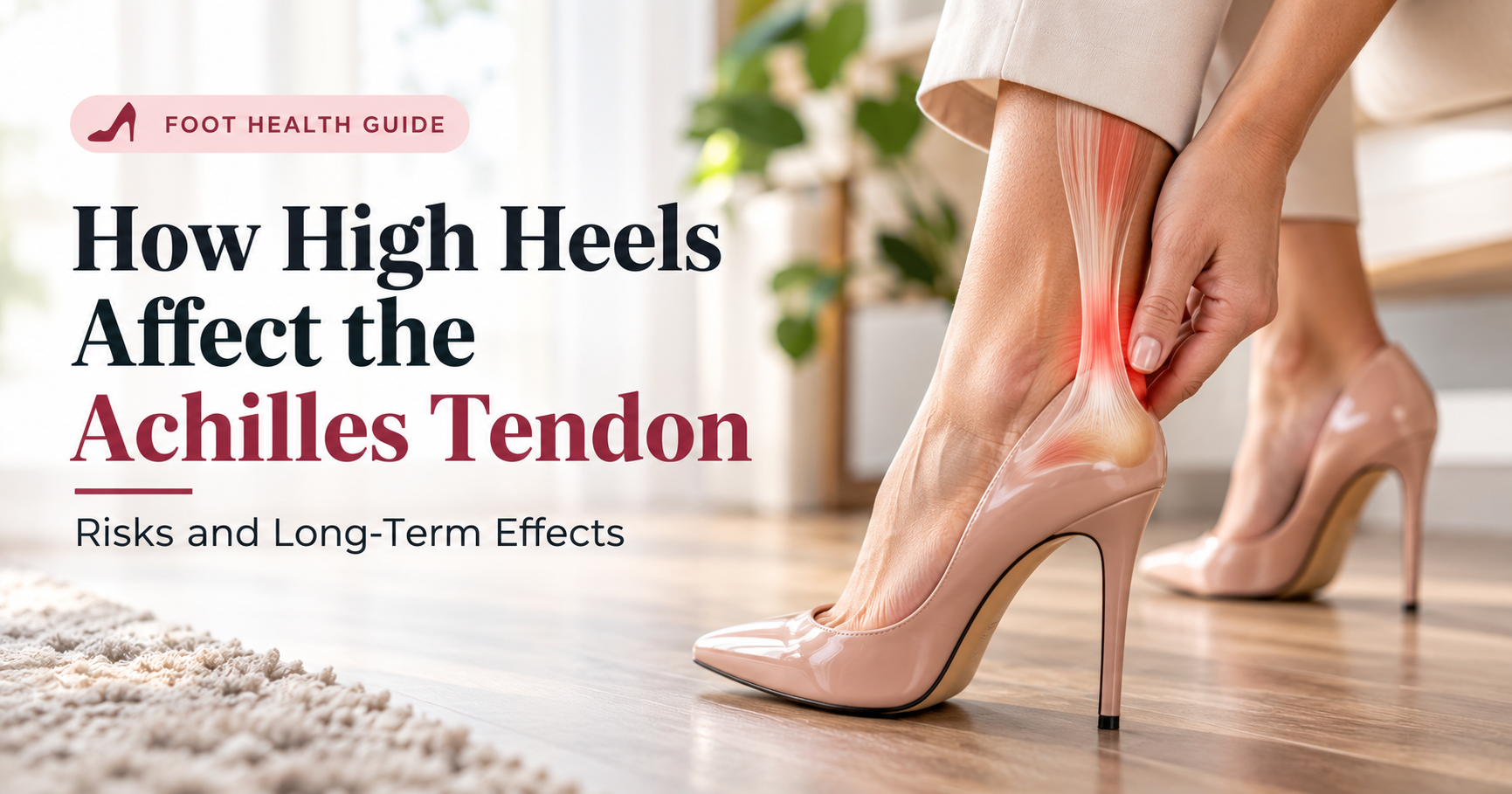
The Achilles tendon is the thick, rope-like cord that runs down the back of your lower leg and attaches to the heel bone (the calcaneus). It is the largest and strongest tendon in the human body, and it connects your two main calf muscles, the gastrocnemius and the soleus, to your foot.
Every time you walk, climb stairs, run or rise onto your toes, the calf muscles contract and the Achilles tendon transmits that force to the heel, pushing your body forward. During running, the tendon can handle loads several times your body weight. Despite this strength, it has a limited blood supply compared with muscle, which means it heals slowly when it is overloaded or irritated.
What High Heels Do to Your Achilles Tendon
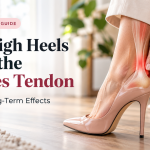
When you stand in flat shoes, your ankle sits at roughly a right angle and your calf muscles and Achilles tendon work at a comfortable, natural length. In high heels, your heel is lifted and your foot is angled downward (a position called plantarflexion). The higher the heel, the steeper this angle becomes.

1. The calf muscle is held in a shortened position
In heels, the calf muscle is parked in a shortened position for the whole time you are wearing them. Your body is excellent at adapting to repeated demands. When the muscle spends hours each day shortened, it can gradually adapt by becoming shorter and tighter.
2. The tendon adapts too
Research comparing women who regularly wear heels with women who do not (including work published in the Journal of Experimental Biology) has reported that habitual heel wearers tend to have shorter calf muscle fibres and a stiffer Achilles tendon. A stiffer tendon is less able to absorb and release energy smoothly, which can make everyday movements less efficient and increase strain on the tissue.
3. Stepping back into flat shoes can be uncomfortable
Because the calf and tendon have adapted to a raised heel, the sudden return to flat shoes, barefoot walking or sports can overstretch the shortened tissues. This is why many women feel an unexpected pull or ache at the back of the ankle after switching to flats, going barefoot on holiday or starting a new workout routine.
4. Pressure at the back of the heel
Many heels have a stiff, narrow heel counter (the cup at the back of the shoe). Repeated rubbing and pressure over the area where the tendon attaches can irritate the tendon and the small fluid-filled sac beside it, called the bursa.
Heel Height: How Much Does It Matter?
There is no single “safe” number for everyone, but the pattern is consistent: the higher the heel, the more the ankle is pointed down, the more the calf shortens and the more weight is shifted to the front of the foot. Wearing time matters just as much as height. A pair of 3-inch heels worn for a two-hour dinner is very different from the same shoes worn for ten hours at work, five days a week.

As a practical guideline, many foot and ankle specialists suggest keeping everyday heels at or below about 2 inches (5 cm) and saving taller heels for short occasions.
Common Achilles Problems Linked to High Heels
Achilles tendinopathy
This is a condition in which the tendon becomes painful, thickened and less tolerant to load because of repeated overuse. It can occur in the middle of the tendon or right where it attaches to the heel bone. Typical signs include morning stiffness, pain after activity and tenderness when you squeeze the tendon.
Retrocalcaneal bursitis
The bursa sits between the tendon and the heel bone. Pressure and friction from a rigid shoe back can inflame it, causing swelling and pain at the back of the heel.
Haglund’s deformity (“pump bump”)
This is a bony enlargement at the back of the heel. It is often nicknamed “pump bump” because stiff-backed pumps commonly rub against it. It can irritate both the bursa and the tendon.
Calf tightness and muscle strain
A chronically shortened calf is easier to strain, especially during sudden activities such as sprinting for a bus, dancing or playing sport after a day in heels.
Tendon rupture (rare but serious)
A complete Achilles rupture is uncommon, and heels alone are not a direct cause. However, a tendon that has been stressed and weakened over time is more vulnerable to sudden, forceful loading. A sudden “pop”, sharp pain and difficulty pushing off the foot need emergency medical care.
Warning Signs: See a Doctor If You Notice
- Pain or stiffness at the back of the ankle that lasts more than two weeks
- Swelling, warmth or redness around the heel or tendon
- A lump or thickened area along the tendon
- Severe morning pain when you take your first steps
- A sudden snap or pop, followed by weakness or inability to rise onto your toes
Who Is at Higher Risk?
- Daily heel wearers, especially those who wear heels for many hours at a stretch
- People wearing very high or thin stiletto heels, which reduce stability and increase strain
- Anyone with naturally tight calves or limited ankle flexibility
- Those with a previous Achilles or ankle injury
- Active people who switch quickly between heels and running or gym workouts
- Anyone taking certain medications, such as fluoroquinolone antibiotics or corticosteroids, which have been linked with tendon problems (ask your doctor if this applies to you)
How to Protect Your Achilles Tendon and Still Wear Heels
You do not have to give up heels completely. A few smart habits can significantly reduce the load on your tendon.
Choose smarter heel styles
| Heel Type | Stability | Achilles Friendliness |
|---|---|---|
| Stiletto | Low | Poor: narrow base, steep ankle angle |
| Block / chunky heel | High | Good: wider base, more stable |
| Wedge | High | Good: full-length support and smoother angle |
| Platform heel | Medium to high | Good: lower effective angle due to raised front |
| Kitten heel (under 1.5 in) | Medium | Very good: minimal ankle angle |
| Supportive flats with slight lift | High | Excellent: ideal for daily wear |
Follow these everyday habits
- Rotate your footwear. Alternate between different heel heights through the week instead of wearing the same pair every day.
- Limit your wearing time. Wear heels for the key moments and change into comfortable shoes for commuting, errands and long periods of standing.
- Make the transition gradual. If you usually wear heels, avoid jumping straight to completely flat shoes. A low, cushioned heel offers a gentler step down.
- Check the fit. The heel counter should hold your heel firmly without digging into the tendon. A soft, padded back lowers friction.
- Add cushioning. Gel heel cups, soft insoles and forefoot cushions help distribute pressure and reduce shock.
- Take breaks. If you sit at a desk, slip your shoes off now and then and circle your ankles.
Exercises to Keep Your Calf and Achilles Healthy
A few minutes of stretching and strengthening each day helps counter the shortening effect of heels. Always move gently; stretching should feel like a mild pull, never sharp pain.

- Wall calf stretch. Stand facing a wall, place your hands on it and step one foot back. Keep the back leg straight and the heel on the floor, then lean forward until you feel a stretch in the calf. Hold for 30 seconds, three times per leg. Repeat with the knee slightly bent to target the deeper soleus muscle.
- Slow heel drops. Stand on the edge of a step, rise up onto your toes with both feet, then slowly lower your heels below the step level over about three seconds. Do three sets of 12 to 15 repetitions. Slow lowering exercises are widely used to build tendon strength, but if they cause sharp pain, stop and seek advice.
- Calf roll release. Sit on the floor with a foam roller or massage ball under your calf and roll gently for one to two minutes per leg, pausing on tight spots. Avoid rolling directly over the tendon itself or any painful, swollen area.
- Ankle circles and toe raises. Keep the joint mobile by drawing slow circles with your foot and by lifting your toes while your heels stay down.
Recovery Tips If Your Achilles Already Hurts
- Reduce the load. Pause high heels and high-impact activity until the pain settles.
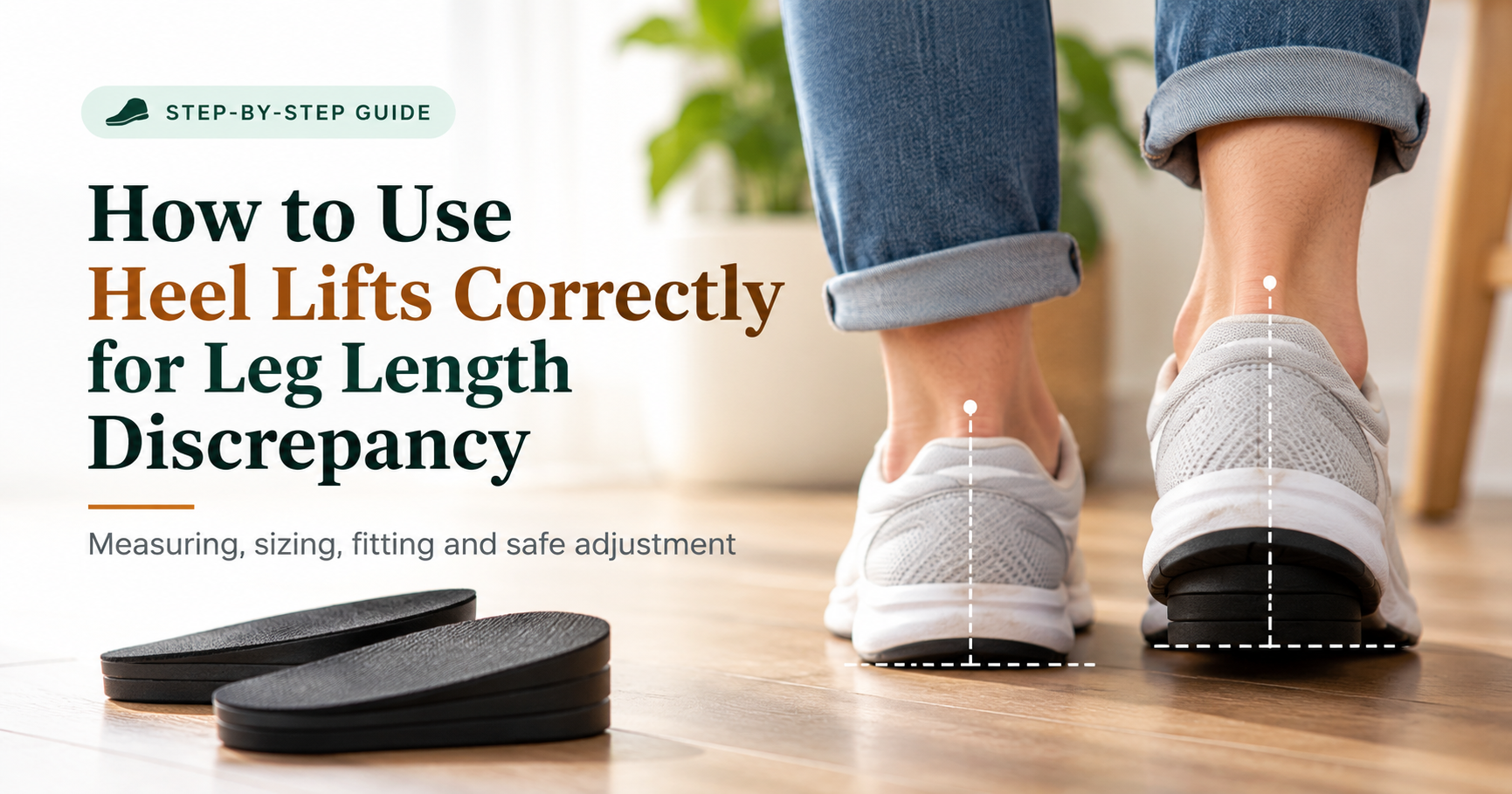
- Use a small heel lift. A slightly raised, cushioned heel in everyday shoes can temporarily take tension off the tendon.
- Apply ice for 10 to 15 minutes after activity if the area feels sore or swollen.
- Return gradually. Build back stretching and strengthening exercises slowly.
- See a physiotherapist or podiatrist. A tailored loading programme is the most reliable treatment for tendon pain, and a professional can check whether footwear, foot shape or training habits are involved.
Smart Shopping Checklist for Tendon-Friendly Shoes
Whether you are buying work heels, party shoes or everyday flats, run through this checklist first:
- Heel height of about 2 inches (5 cm) or less for regular use
- A wide, stable heel base such as a block, wedge or platform
- A padded, soft heel collar that does not press on the tendon
- Cushioned insole with good arch support
- Roomy toe box so your forefoot is not squeezed
- Flexible sole that bends at the ball of the foot, not in the middle
- Try shoes on in the afternoon when feet are slightly larger, and walk around the store
Frequently Asked Questions
Can high heels damage the Achilles tendon permanently?
Occasional wear is unlikely to cause lasting harm. Long-term, frequent wear can lead to a tighter calf and stiffer tendon, which increases the risk of pain and tendon problems. Many of these changes can improve with stretching, strengthening and less time in tall heels.
Is it bad to wear heels every day?
Daily wear at a tall height places repeated stress on the calf and tendon. If you must wear heels often, choose a lower, wider heel, vary your shoes and stretch regularly.
Why does my Achilles hurt after wearing flats?
If your calf has adapted to a raised heel, flat shoes stretch it more than it is used to. This can cause temporary pulling or aching. Gentle calf stretching and a gradual change in heel height usually help.
Are wedges better than stilettos for the Achilles?
Generally yes. Wedges and block heels spread pressure over a larger area and are more stable. However, a very high wedge still holds the ankle pointed down, so height still matters.
Do heel pads or inserts help?
Cushioned inserts and heel cups can reduce friction and shock and make shoes more comfortable. They do not remove the effect of heel height on the calf, so they work best alongside sensible shoe choices and stretching.
Can I still exercise if my Achilles hurts?
Mild discomfort may allow low-impact activities such as cycling or swimming, but continuing running or jumping through tendon pain can make things worse. If pain persists, get a professional assessment.
Final Thoughts
High heels do not have to be the enemy of healthy ankles, but they do ask a lot of your Achilles tendon. By understanding how heel height shortens the calf and stiffens the tendon, you can make informed decisions: choose wider, lower heels, limit how long you wear them, rotate your shoes and keep your calves flexible and strong. Listen to early warning signs, since tendons respond best when problems are caught early. Style and foot health can work together when you wear your heels thoughtfully.
Medical disclaimer: This article is for general information and education only and is not a substitute for professional medical advice, diagnosis or treatment. Always consult a qualified healthcare professional, such as a doctor, podiatrist or physiotherapist, about any pain or injury.
Affiliate disclosure: Some product mentions on this website may be affiliate products. If you choose to buy through them, we may earn a small commission at no extra cost to you. We only recommend items we believe offer real value.