





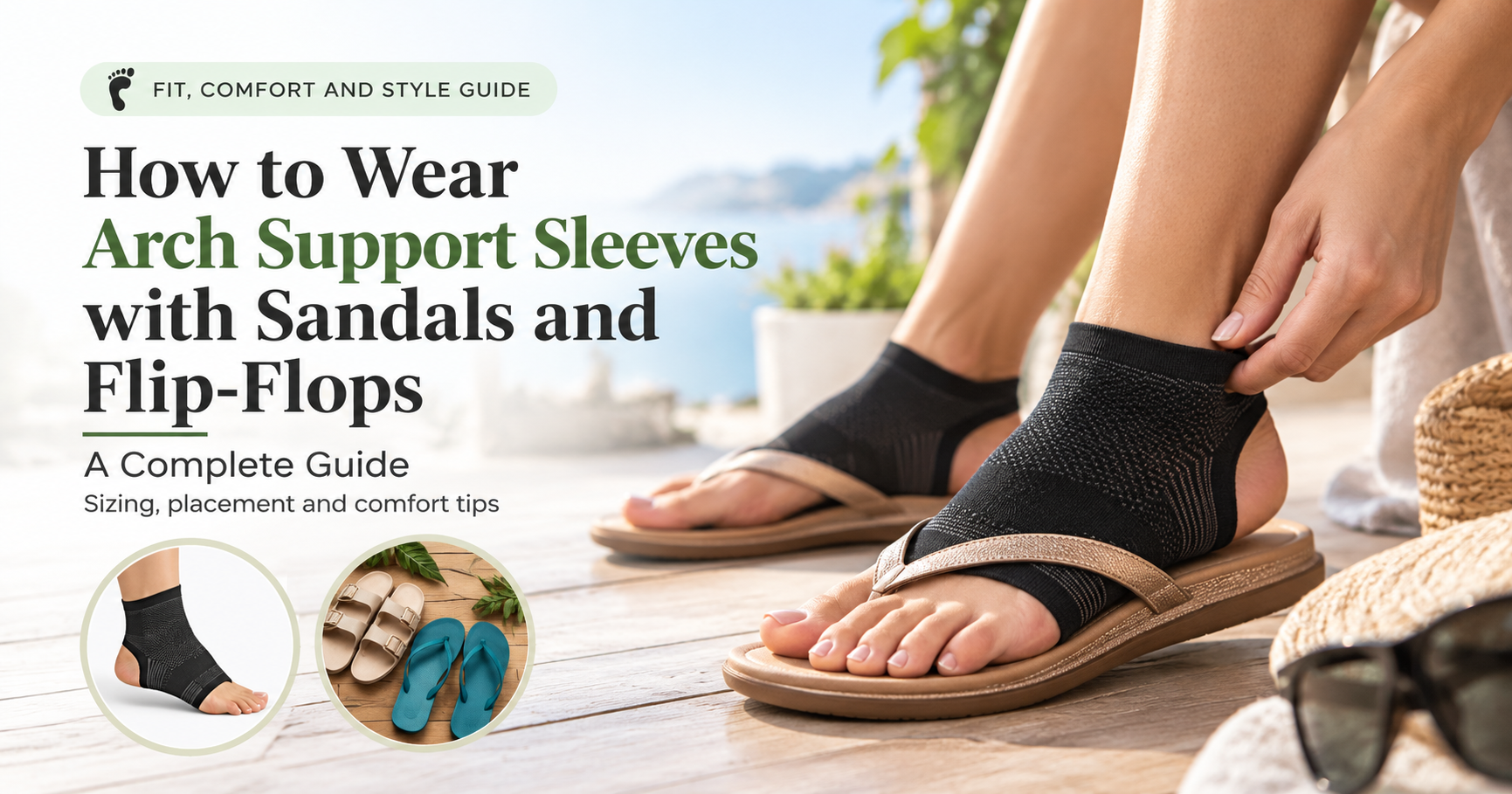

Summer foot comfort can feel like a trade-off. Sandals and flip flops keep your feet cool, but they often offer very little support. If you deal with arch aches, tired feet or plantar fasciitis, you may wonder whether an arch sleeve can work with open footwear without looking awkward or feeling uncomfortable.
The answer is yes, with the right sleeve and the right technique. This guide explains how to use an arch sleeve with sandals and flip flops: what an arch sleeve is, which sleeve styles suit open shoes, how to size and position it, which sandals work best, and the mistakes that cause bunching, rubbing and discomfort.
What Is an Arch Sleeve?
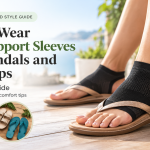
An arch sleeve, also called an arch support band or arch compression sleeve, is a stretchy, tube-like or band-like piece of fabric that wraps around the midfoot. Most designs are open at the heel and toes, so the sleeve covers only the arch area. A typical sleeve is made from nylon and spandex, and some include a small gel pad or ribbed panel positioned under the arch.
The sleeve gently compresses the arch area and the tissues around it. People commonly use it to ease the feeling of tired, achy feet, to add light support during long days, and to help manage everyday strain on the arch. It is not a replacement for a rigid orthotic when one has been prescribed, and it will not change the shape of your foot.

Why Wear an Arch Sleeve with Sandals?
- Extra support in unsupportive footwear: Many sandals have flat soles and offer little arch support.
- Light compression: The snug wrap can reduce the sensation of foot fatigue by the end of the day.
- Works with shoes that cannot hold an insole: Thin sandals and flip flops often do not have room for a bulky insert.
- Portable and discreet: A thin sleeve is easy to carry and wears under a strap.
- Adds a little cushion where it matters: Sleeves with a gel pad give the arch a soft contact point.
Can You Really Wear an Arch Sleeve with Flip Flops?
Yes, but flip flops are the trickiest style, so it helps to know why. A flip flop has a flat sole and a strap that anchors between the toes and at the sides of the midfoot. That strap anchor often sits right where the sleeve lies, so a thick sleeve can bunch, pinch or push the strap onto the skin.
A thin, smooth sleeve that sits slightly behind the strap anchor usually works well. Thick, padded or very tight sleeves tend to be uncomfortable in a thong-style sandal. Keep in mind that a flip flop itself offers almost no structure, so the sleeve provides compression more than true support. For long walks, a sandal with a contoured footbed is a better pairing.

How to Choose the Right Arch Sleeve for Open Footwear
Thickness
For sandals and flip flops, choose a thin, lightweight sleeve. Thinner fabric slides under straps without bulk and looks neater with an open shoe.
Seamless construction
Flat or seamless edges reduce rubbing against sandal straps and skin. Rough seams are a common cause of blisters in open shoes.
Breathable, moisture-wicking fabric
Feet sweat in warm weather. Look for breathable knit that dries quickly and does not hold moisture against the skin.
Open heel and open toe design
An open design keeps the heel and toes free, which is what makes the sleeve compatible with sandals. Avoid full foot socks in sandals unless that look is intended.
Gentle but firm compression
The sleeve should feel snug and supportive, not tight. If your skin shows deep marks or your toes feel numb, it is too tight.
Color and finish
Skin-tone or neutral shades look discreet under straps. Black can look sleek with dark sandals. Pick a color you are comfortable showing, since part of the sleeve may be visible.
Anti-slip features
A light silicone or grippy inner band helps the sleeve stay put during walking, especially with slippery sandal footbeds.
How to Size an Arch Sleeve Correctly
Most arch sleeves are sized by shoe size ranges, such as small, medium and large. Check the size chart on the packaging, and use the shoe size you normally wear. If you are between sizes, look at the tightness described by the maker. People with wide feet or higher arches may prefer the larger size, while those who want firmer compression may go smaller. A properly sized sleeve lies flat, with no folds and no sliding.
How to Put On an Arch Sleeve Step by Step

Step 1: Start with a clean, dry foot
Moisture and lotion can make the fabric twist or slip. Dry thoroughly, especially between the toes and around the arch.
Step 2: Slide it on from the toes
Pull the sleeve over your toes and forefoot, then ease it back toward the arch. Do not yank it, because overstretching weakens the elastic.
Step 3: Center it under the arch
The band or gel pad should rest under the arch, which is the curved part between the ball of the foot and the heel. Adjust until it feels supportive and sits in the middle of the arch.
Step 4: Smooth out wrinkles
Run your fingers around the sleeve to remove any folds, especially at the edges where a sandal strap will rest.
Step 5: Put on your sandal and check the strap
Slide your foot into the sandal and make sure the straps lie flat over the sleeve. If a flip flop strap presses a lump into your skin, shift the sleeve slightly toward the heel or use a thinner one.
Best Sandal Styles to Wear with an Arch Sleeve
| Sandal type | Works with a sleeve? | Why | Watch out for |
|---|---|---|---|
| Sport or strappy sandals | Excellent | Adjustable straps give room for the sleeve | Straps over seams |
| Velcro adjustable sandals | Excellent | Easy to loosen for a snug sleeve | Edges of the strap rubbing |
| Wide-strap slides | Very good | Wide straps spread pressure evenly | Slipping forward |
| Contoured footbed sandals | Very good | Built-in support pairs well with compression | Too snug a fit when both are thick |
| Flip flops | Fair | Works with a thin sleeve only | Strap anchor bunching |
| High wedges and heels | Poor | Pitch changes how the foot loads | Sleeve sliding forward |

Tips for Wearing an Arch Sleeve with Flip Flops
- Pick the thinnest sleeve you can: Lightweight fabric reduces strap pressure.
- Move the sleeve toward the heel: A small shift can take it off the strap anchor.
- Avoid gel pads that sit high: A raised pad can push against the strap and the sole.
- Choose flip flops with a soft, contoured footbed: Some have gentle arch contouring that pairs better than a flat one.
- Break them in: Wear the combination for short trips first.
- Do not use them for long hikes: For all-day walking, a sandal with a firm sole and heel strap is a safer choice.
Common Mistakes to Avoid
- Wearing it too tight: Compression should feel supportive, not painful.
- Letting it twist or fold: A rolled sleeve creates pressure lines.
- Choosing a thick sleeve for thin straps: Bulk leads to rubbing.
- Ignoring skin irritation: Redness, blisters or itching mean something needs to change.
- Using the wrong size: A loose sleeve slides, and a tight one cuts off comfort.
- Sleeping in it: Unless a professional advises it, remove the sleeve at night.
- Expecting it to fix everything: A sleeve helps comfort but may not treat the cause of foot pain.
How Long Should You Wear an Arch Sleeve?
Start with an hour or two, then build up as your feet adapt. Many people wear a sleeve for a few hours at a time or for the length of an activity such as shopping or sightseeing. Take it off if you notice numbness, tingling, color change in the toes or increasing pain.
How to Care for Your Arch Sleeve
- Wash after use, since sandals leave sweat, sunscreen and dust on the fabric.
- Hand wash in cool water with mild soap, or use a gentle machine cycle in a mesh bag.
- Air dry flat and avoid direct heat, which weakens elastic.
- Keep a second sleeve so one is always clean and dry.
- Replace the sleeve when it stretches out or loses its grip.
Who Should Be Careful Using an Arch Sleeve?
Buying Guide: What to Look for in an Arch Sleeve for Sandals
- Thin, stretchy, breathable fabric: The foundation of a comfortable summer sleeve.
- Clear size chart: Look for sizes matched to shoe size ranges.
- Seamless or flat edges: Reduces rubbing under straps.
- Open heel and toe design: Needed for most sandal styles.
- Light gel or ribbed arch panel: Optional, but helpful for arch contact.
- Multipacks: Useful for rotating pairs and keeping one clean.
- Skin-friendly materials: Look for latex-free options if you have sensitive skin.
- Easy returns: Fit is personal, so a return policy matters.
Arch Sleeve vs Insole vs Orthotic: What Is the Difference?
- Arch sleeve: A soft, wearable band that adds light compression and works in many open shoes.
- Arch support insole: Sits inside a shoe and gives firmer support, but needs a shoe with enough room.
- Custom orthotic: Made for your foot by a professional. It is the most tailored option for complex problems.
Some people use a sleeve and a supportive sandal together, which can be a good combination for light to moderate everyday discomfort.
When to See a Professional
- Heel or arch pain that lasts more than a couple of weeks
- Pain that is sharp, worsening or waking you at night
- Numbness, tingling, swelling or color changes
- Pain after an injury
- Foot problems linked to diabetes or circulation
Frequently Asked Questions
Can I wear an arch sleeve with flip flops?
Yes, a thin, smooth sleeve usually works, especially when positioned slightly behind the strap anchor points.
Will an arch sleeve show in sandals?
Part of it can be visible. A skin-tone or neutral color helps it blend in, and some people choose a color that matches their outfit.
Do arch sleeves help plantar fasciitis?
Many people find them comfortable for mild arch and heel strain, but they are one part of a wider plan that may include stretching, supportive footwear and professional advice.
Can I wear an arch sleeve all day?
Some people do, but it is wise to build up gradually and remove it if you feel discomfort or numbness.
Should an arch sleeve go over or under socks?
With sandals, most people wear it directly on bare skin. For closed shoes, a thin sock layer can be worn over or under it based on comfort.
Why does my sleeve slide in sandals?
It may be too loose, or the footbed may be slippery. Try a smaller size, a sleeve with a grip band, or clean, dry feet before putting it on.
Is a thicker arch sleeve better?
Not always. Thicker designs can offer more padding, but they often do not fit well under sandal straps.
Final Thoughts
Using an arch sleeve with sandals and flip flops comes down to a few simple choices: pick a thin, seamless, breathable sleeve, size it correctly, center it under the arch, keep the straps flat over it, and match it to a sandal that has a bit of structure. A flip flop is workable but the least supportive pairing, so save the longest walks for sport sandals or contoured styles.
With the right fit, you can keep your feet cooler and more comfortable through the summer without giving up your favorite open footwear.
Affiliate disclosure: Some product recommendations on this site may earn a commission at no extra cost to you.