








If you’ve noticed one of your toes bending downward at the middle joint—especially the second, third, or fourth—it could be hammertoe, a common foot deformity affecting millions. As the toe curls into a claw-like shape, it can rub against shoes, form painful corns, and make walking uncomfortable. A toe straightener for hammertoe offers a non-surgical way to ease symptoms by gently realigning the bent toe, reducing pressure, and protecting sensitive skin.
While it won’t permanently fix a rigid, long-standing hammertoe, consistent use of a toe straightener—especially in the early, flexible stage—can slow progression, relieve pain, and improve comfort during daily activities. These devices come in various forms, from soft gel sleeves to supportive wraps and pressure-relieving pads, each designed to address specific aspects of the condition. In this guide, you’ll learn how toe straighteners work, the different types available, their benefits and limitations, and how to use them effectively as part of a complete foot care plan.
Types of Toe Straighteners for Hammertoe

Gel Splints for Flexible Hammertoes
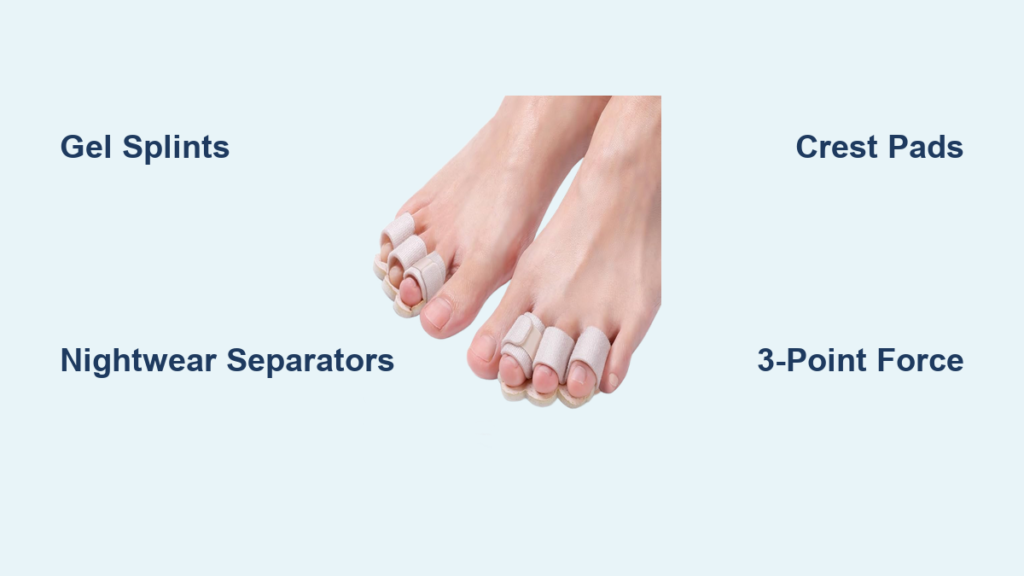
Gel splints are among the most widely used toe straighteners, particularly the triple-loop design that fits over the second, third, and fourth toes. Made from soft SEBS gel, these devices cushion the tops of bent toes while gently guiding them into a straighter position. A built-in bottom pad helps reduce pressure under the foot, making them suitable for all-day wear.
Their low profile allows use with most footwear—even heels and tight shoes—without adding bulk. Available in clear or skin-tone colors, models like the Triple Loop Gel Hammertoe Straightener offer discreet, reusable support. Because they combine alignment with comfort, gel splints are ideal for people with mild, flexible hammertoes that can still be manually straightened.
Toe Separators for Nighttime Use
Toe separators function like pedicure spacers, fitting between toes to prevent rubbing and encourage natural spacing. Constructed from medical-grade silicone or gel, they help stretch tight soft tissues and reduce stiffness in overlapping toes.
Though too bulky for most shoes, products like Visco-GEL® Stay-Put Toe Separators® stay securely in place during rest. They’re especially beneficial for individuals whose toes cross over each other or develop painful corns between digits. For optimal results, wear them nightly to maintain joint flexibility and gradually reduce discomfort.
Single Gel Spreaders for Targeted Protection
When only one toe is affected, a single gel spreader provides focused relief. These small, sleeve-like covers slip over the bent toe, preventing it from sliding under adjacent toes or chafing against footwear. Made from soft silicone or gel, they cushion the toe and help maintain proper alignment.
Sold in multi-packs (e.g., Gel Toe Spacers – 10 pack), these are durable, discreet, and easy to clean. Ideal for narrow shoes, they don’t add significant volume, making them perfect for professionals or active users who need a low-profile solution. While they don’t actively straighten the toe, they protect the skin and reduce pain caused by friction.
Hammer Toe Crest Pads for Pressure Relief
Crest pads are worn under the foot, just behind the ball of the foot (metatarsal area), to lift and support the bent toe from below. Unlike splints that go over the toe, these pads work by elevating the metatarsal head, which reduces downward pressure on the tip of the hammertoe.
Available in foam or gel, crest pads like the Visco-GEL® Hammer ToeCrutch® help prevent calluses and ulcers. They’re designed to fit inside shoes and are often used with orthotic insoles. The gel version offers superior shock absorption, making it better suited for people on their feet all day or those with high-impact lifestyles.
Toe Wraps with Adjustable Support
Toe wraps use hook-and-loop (Velcro) closures to hold the hammertoe in a straighter position. Constructed from neoprene or soft foam, they apply gentle tension across the joint to correct alignment. The PROFOOT Toe Straight Hammertoe Wrap is a popular example—non-bulky and built for daily wear.
Advanced models like the Pozpo Tech Hammer Toe Straightener feature a built-in aluminum plate that uses a patented 3-point force system to engage all three toe joints (MTP, PIP, DIP). This design enhances correction and is ideal for users needing stronger structural support. However, the metal component must be removed before washing.
Budin and Buddy Splints for Mechanical Correction
Budin splints use an adjustable loop to connect two toes, applying mechanical leverage to straighten overlapping or crooked toes. Available as single or double-toe versions, they work well for flexible hammertoes and can be worn day or night.
Buddy splints, such as the Visco-GEL® 5-ToeBuddy®, bind the affected toe to a healthy neighbor for stabilization. Often used after injury or surgery, they limit motion and reduce pain. While less common for everyday hammertoe management, they’re effective when joint instability is a concern.
How Toe Straighteners Fix Hammertoe Symptoms
Apply Passive Stretching to Tight Tendons
Hammertoe develops due to a muscle-tendon imbalance, where the flexor tendons pull the toe downward. Toe straighteners counteract this by providing continuous, low-force stretching. Over time, this can improve flexibility—especially in early-stage, flexible hammertoes that can still be manually straightened.
Devices like gel splints and separators maintain this stretch throughout the day or night, helping to loosen contracted tissues. Consistent use may slow progression and reduce stiffness, making it easier to move the toe naturally.
Use 3-Point Force for Enhanced Alignment
Some advanced straighteners, such as the Pozpo Tech model, use a 3-point force system. This method applies pressure at three strategic points along the toe:
– Base (metatarsophalangeal joint)
– Middle (proximal interphalangeal joint)
– Tip (distal interphalangeal joint)
By balancing these forces, the device encourages full-joint alignment. This is more effective than simple cushioning and mimics clinical taping techniques used by podiatrists.
Redistribute Pressure and Prevent Skin Damage
One of the biggest benefits of toe straighteners is pressure redistribution. Bent toes press abnormally against shoes, leading to corns, calluses, and blisters. Crest pads and gel sleeves absorb shock and lift pressure away from sensitive areas.
For example, a hammer toe crest pad lifts the metatarsal head, reducing load on the toe tip. This not only relieves pain but also prevents skin breakdown—critical for people with diabetes or sensitive skin.
Reduce Friction Inside Shoes
Friction between the bent toe and shoe upper is a major source of discomfort. Toe straighteners with gel or silicone covers create a smooth barrier, minimizing rubbing. This is especially helpful in tight or low-cut shoes where the toe joint is exposed.
Wraps and splints also keep the toe from moving excessively, further reducing irritation. For those who wear dress shoes or heels, low-profile gel loops offer protection without sacrificing style.
Benefits of Using a Hammertoe Straightener

Immediate Pain Relief During Walking
One of the fastest benefits users notice is reduced pain when standing or walking. By aligning the toe and cushioning the joint, straighteners reduce pressure on nerve endings and inflamed tissues. Many report being able to wear shoes they previously avoided.
Improve Toe Function and Mobility
Regular use can enhance toe flexibility, especially when combined with exercises. Over time, users may find it easier to wiggle their toes or walk barefoot. This improved mobility supports better balance and foot mechanics.
Prevent Corns and Calluses
By minimizing friction and pressure, toe straighteners help prevent the thickened skin that leads to corns and calluses. This is crucial for long-term foot health and avoiding secondary complications like ulcers.
Avoid Surgery with Early Intervention
While not a cure, consistent use of a toe straightener—especially in the flexible stage—can delay or even eliminate the need for surgery. When combined with proper footwear and exercises, it’s a powerful tool in non-invasive management.
Wear with Most Shoes
Many models are designed to be low-profile and discreet. Gel splints and single spreaders fit easily in dress shoes, sneakers, and boots. This makes it possible to stay active and stylish without sacrificing comfort.
Limitations of Toe Straighteners

Not a Permanent Fix for Rigid Hammertoes
A key reality: toe straighteners cannot correct fixed, rigid hammertoes. Once the joint has stiffened and can no longer be manually straightened, the only permanent solution is surgical correction. Procedures like tendon release or joint fusion may be necessary to restore alignment.
These devices are most effective when the deformity is still flexible—meaning you can press the toe flat with your hand. If your toe is stiff and painful, consult a podiatrist to assess surgical options.
Mixed User Experiences and Comfort Issues
Customer reviews show divergent results:
– Some users praise pain relief and improved alignment.
– Others report discomfort, especially from Velcro straps that irritate the skin.
– Some wraps lose elasticity or break after a few weeks of use.
Fit is critical—too tight can restrict circulation; too loose reduces effectiveness. Trial and error may be needed to find the right product.
Risk for Diabetics and Those with Poor Circulation
People with diabetes, neuropathy, or vascular disease must use caution. Reduced sensation means you might not feel irritation or pressure sores developing. Always consult a doctor before using any toe device if you have these conditions.
Possible Overcorrection or Rebound Effect
In rare cases, overuse of a strong splint can lead to overcorrection, where the toe bends in the opposite direction. Others report a rebound effect—pain returning or worsening after removing the device. This highlights the need for balanced, moderate use.
How to Use and Care for Toe Straighteners
Step-by-Step Application Guide
- Wash and dry your feet thoroughly before applying.
- Slide toes into loops or wrap the device according to instructions.
- Adjust for snug but comfortable fit—no pinching or numbness.
- Wear during activity or sleep, depending on the model.
- Check your skin regularly for redness, irritation, or sores.
Start with short wear periods (1–2 hours) and gradually increase to full-day use as your foot adjusts.
Cleaning and Longevity Tips
- Hand wash with mild soap and water after each use.
- Air dry completely—never use a dryer or direct heat.
- Remove metal plates (e.g., in Pozpo Tech) before washing.
- Avoid harsh chemicals or alcohol-based cleaners.
Replace the device when it shows signs of wear, tearing, or loss of elasticity. Most last several weeks to months, depending on use.