If you’ve noticed your shoes wearing down faster on the outside edge—especially at the heel—you’re not alone, and it’s not just a sign you need new footwear. Premature wear on the outer edge of shoes is a common but telling indicator of how your body moves. While a slight outward heel strike is normal for most people (about 75–90% of heel strikers), consistent or asymmetric lateral wear often points to supination (underpronation), poor gait mechanics, or even hidden nerve dysfunction. This isn’t just about replacing shoes sooner—it’s about recognizing a pattern that can lead to ankle sprains, stress fractures, knee pain, and long-term joint strain. The good news? Your shoes are giving you real-time feedback. By learning to read the wear, you can take action before discomfort turns into injury. In this guide, you’ll learn how to identify problematic patterns, understand their root causes, choose better footwear, and correct movement habits to protect your body.
What Lateral Shoe Wear Actually Looks Like
Diagonal Heel Wear: A Sign of Hard Lateral Impact
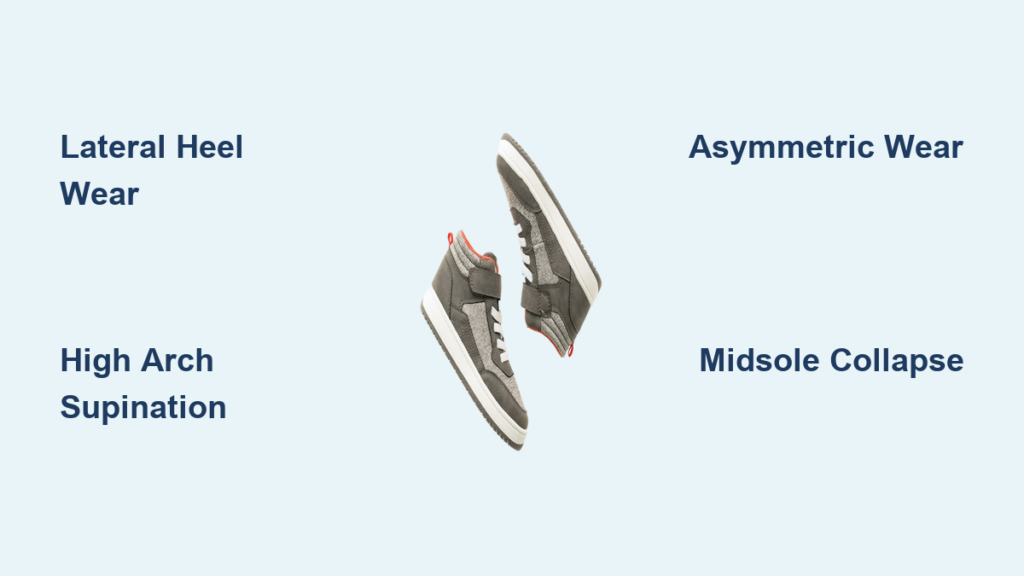
A sharp, slanted groove cutting across the back outer corner of the heel is one of the clearest signs of excessive lateral loading. This diagonal wear forms when your foot strikes the ground hard on the outside edge and fails to roll inward properly during the gait cycle. Instead of distributing force evenly through the arch and midfoot, the impact travels along a narrow band, accelerating wear. When viewed from behind, these shoes often appear tilted outward—confirming that weight is consistently loaded on the outer edge. This pattern is especially common in runners or walkers who overstride, landing with their foot ahead of their body’s center of gravity, creating a braking motion that drives the heel into the ground at an angle.
Full-Edge Sole Degradation: Chronic Supination in Action
When wear extends from the heel all the way to the base of the pinky toe, it signals chronic supination—the foot remains locked on the outer edge throughout the entire stance and push-off phase. This is typical in people with high, rigid arches who lack natural shock absorption. Over time, this not only wears down the rubber outsole but can also compress and crack the midsole foam beneath, reducing cushioning and stability. You might notice the shoe feels “flat” or “dead” even if the tread looks only moderately worn. This type of wear increases stress on the fifth metatarsal, peroneal tendons, and lateral ankle, raising the risk of overuse injuries.
Asymmetric Wear: One Shoe Wears Faster Than the Other
If one shoe shows significantly more outer wear than the other, it points to gait asymmetry—a red flag for biomechanical imbalance. This could stem from a leg length discrepancy, past injury (like an ACL tear), muscle weakness, or even subtle nerve dysfunction in the lower back. Even minor differences in hip alignment or muscle activation can cause one side to over-supinate, leading to uneven wear and increased injury risk on the dominant or weaker leg. Pay attention if one shoe collapses faster or if you consistently feel more fatigue on one side after walking or running.
Why the Outer Edge Wears: The Biomechanics Explained
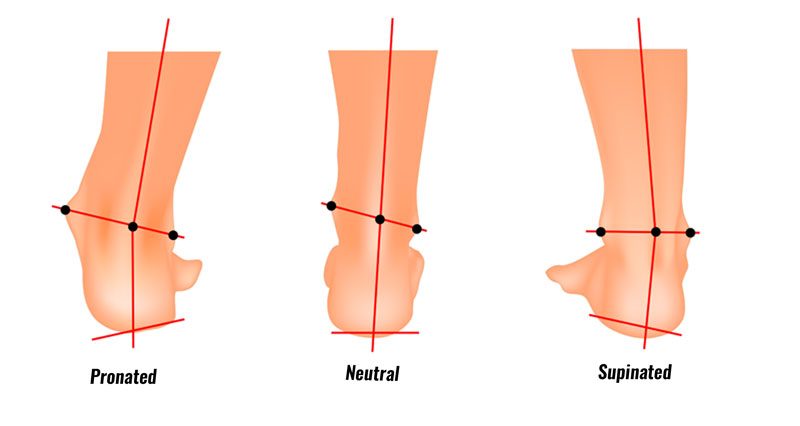
Supination and Underpronation: The High-Arched Gait
Supination, or underpronation, occurs when the foot doesn’t roll inward enough after heel strike. While a slight outward strike is normal, the problem arises when the foot stays on the outside edge. Without proper pronation, the arch doesn’t flatten to absorb shock, and the foot pushes off from the outer toes instead of the big toe. This rigid, high-arched gait increases ground reaction forces sent up the leg. Supinators often have tight calves, weak glutes, and poor ankle mobility, turning their feet into rigid levers that transfer impact straight to the knees, hips, and spine.
Supinators run like they’re on a wooden board—no spring, no give. Their feet don’t absorb shock well, making every step a mini-impact event.
Hip and Pelvic Mechanics: The Hidden Drivers
Outer edge wear isn’t just a foot issue—it’s often driven by hip and trunk control. Excessive leg adduction (the leg crossing toward the midline) or pelvic rotation (“salsa dancing gait”) can force the foot to land sharply on the outside heel. This commonly happens when:
– The gluteus maximus fires too early, limiting hip extension.
– The iliopsoas is tight, pulling the femur into external rotation.
– The core is weak, allowing the torso to sway or rotate excessively.
These compensations shift loading laterally, accelerating shoe wear and straining the IT band, knee, and lower back.
Nerve-Driven Supination: A Silent Culprit
Surprisingly, irritated lumbar nerves (L4, L5, S1) can cause or worsen supination—even without back pain. When spinal nerves are compressed or inflamed, they may fail to properly activate key stabilizing muscles like the gluteus medius, tibialis posterior, or peroneals. This leads to poor dynamic control of the foot, resulting in compensatory underpronation. If outer wear is progressive and unexplained by gait alone, a neurological evaluation may be warranted.
When Outer Wear Is a Warning Sign
Inward Shoe Tilt Despite Lateral Wear
Here’s a paradox: your shoe shows outer heel wear, but when placed on a flat surface, the heel leans inward. This indicates midsole collapse—the foam has broken down on the inside, allowing the heel to tilt despite initial lateral impact. This pattern reveals a two-phase gait fault: the foot strikes laterally but then collapses into overpronation. It’s a sign of instability and poor shock absorption, commonly seen in worn-out shoes or individuals with weak arch support.
Combined Inside Forefoot and Outside Heel Wear
This “rockered” wear pattern—outside heel plus inside ball of foot—signals excessive transition from lateral strike to medial roll. While some roll is normal, too much creates torsional stress on the midfoot. If paired with symptoms like arch fatigue or knee discomfort, it suggests the foot is unstable and overworking to compensate.
Rapid, Uneven Breakdown
Shoes wearing out in under 300 miles, especially if one side fails faster than the other, is a major red flag. Normal wear takes 300–500 miles. Premature breakdown suggests:
– High-impact gait mechanics
– Poor shoe fit or type
– Muscle imbalances or neurological dysfunction
If your shoes are collapsing faster than your training is increasing, your body is sending a warning.
How to Assess Your Gait at Home
Shoe Tilt Test: Check for Instability
Place both shoes on a flat surface and view them from behind.
– Normal: Heels stand straight or tilt slightly outward.
– Problem: Heels tilt inward, especially with inner forefoot wear.
This test reveals midsole integrity and dynamic alignment. An inward lean suggests overpronation post-impact, even if the initial strike is lateral.
Wet Footprint Test: Know Your Arch Type
Wet your feet and step on paper.
– Narrow or no midfoot print: High arch → supination.
– Wide, full print: Low arch → overpronation.
– S-shaped strip: Neutral arch.
This simple test helps match your foot type to the right shoe and orthotic support.
Heel Alignment Check: Barefoot Observation
Stand barefoot in front of a mirror, feet hip-width apart. Look at your heels from behind.
– Heel vertical or slightly angled outward: Normal for supinators.
– Heel tilting inward (valgus): Sign of overpronation or instability.
If your heels cave in, your arches may be collapsing under load—even if your shoes show outer wear.
Best Shoes for Outer Edge Wear

Cushioned, Flexible Models Recommended
Supinators need maximum shock absorption, not stability or motion control. Shoes with soft midsoles, high stack height, and lateral flexibility help disperse impact forces.
Top Picks:
- Brooks Glycerin: Ultra-cushioned, smooth ride
- Asics Cumulus: Balanced softness and durability
- Saucony Ride: Responsive PU foam, good lateral flex
- New Balance More v4: High stack, wide toe box
- Adidas Ultraboost 22: Energy-return foam, excellent impact protection
Avoid stability shoes with medial posts—they can worsen supination by blocking natural movement.
What to Avoid in Footwear
- Motion control shoes: Too rigid for high-arched feet
- Low-drop or minimalist shoes: Lack cushioning needed for shock absorption
- Worn-down heels: Exaggerate gait faults and increase injury risk
Replace Shoes by Midsole, Not Sole
Outsole wear is misleading. The real indicator is midsole compression:
– Creases or wrinkles in the heel foam
– Loss of bounce when compressing the heel
– New pain after long runs
Replace every 300–500 miles or 45–60 hours of use—whichever comes first.
Corrective Strategies That Work
Orthotics and Insoles for Supination
Custom or OTC orthotics can improve alignment and reduce lateral loading.
Key Features for Supinators:
- Deep heel cup: Stabilizes the calcaneus
- Lateral forefoot posting: Encourages medial roll
- Shock-absorbing materials: EVA, PORON, or gel
- Arch support for high arches: Prevents pressure concentration
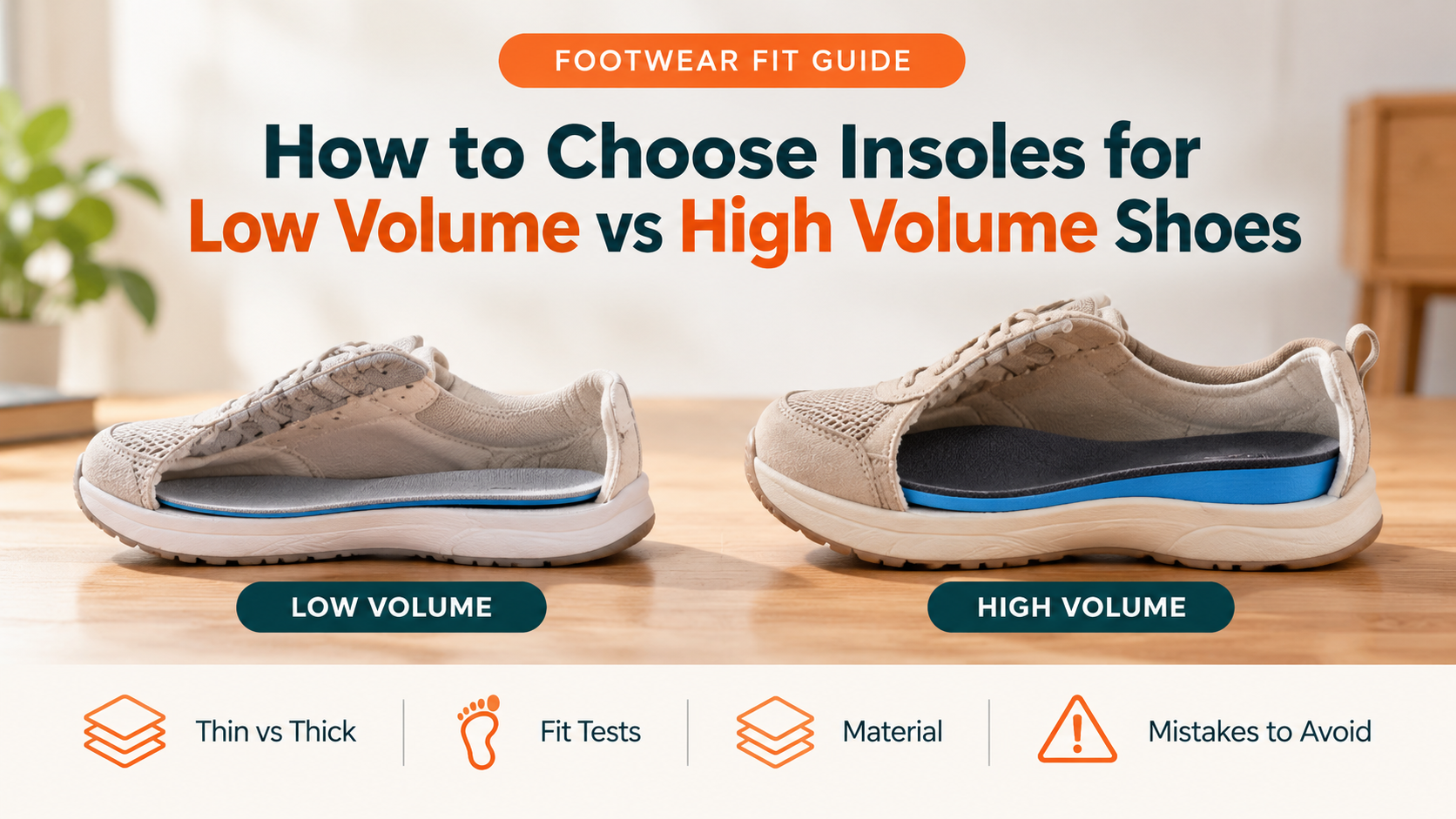
A good insole spreads impact across more of the foot—like adding padding to a stiff floor.
Gait Re-Education: Fix the Root Cause
“You don’t need new shoes. You need new movement.” — Correcting gait is more effective than passive support.
4 Key Fixes:
- Reset Posture
– Level hips and shoulders
– Drop rib cage to avoid forward lean
– Engage glutes to stabilize pelvis - Land Under Your Center
– Avoid overstriding
– Let leg swing naturally under the torso
– Use lower abs to control trunk motion - Stop Excessive Rotation
– Keep knees and toes forward
– Activate glutes to prevent “salsa dancing” pelvis
– Stabilize core to reduce twisting - Improve Weight Transfer
– Delay push-off until full loading
– Increase use of weaker leg
– Practice single-leg balance drills
Strength and Mobility Training
Ankle Mobility:
- Calf raises (double and single leg)
- Ankle circles and alphabet drills
- Squat-to-stand with heels down
Hip and Glute Strength:
- Clamshells
- Side planks
- Glute bridges with band
Foot Intrinsic Exercises:
- Towel scrunches
- Short foot exercise
- Toe spreads
Poor ankle mobility can force the foot to strike laterally—freeing up the ankle often reduces outer edge wear.
Final Note: Your shoes are more than footwear—they’re data loggers for your body. Premature wear on the outer edge of shoes isn’t just about replacing gear; it’s a signal to examine how you move. By addressing the root causes—whether biomechanical, neurological, or postural—you can extend shoe life, reduce injury risk, and move more efficiently. Don’t ignore the message in the tread.