

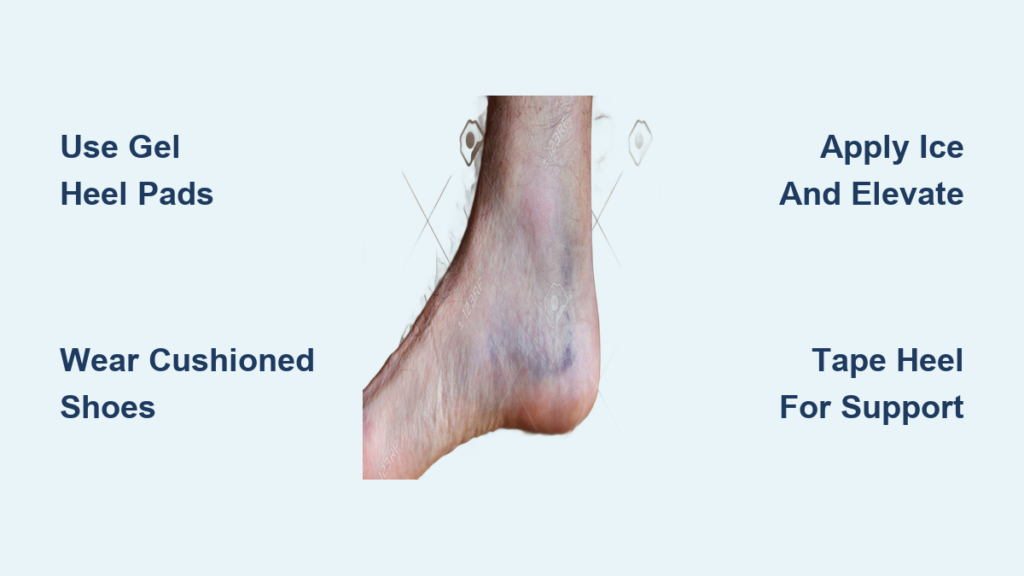
If you’ve ever landed hard on your heel after a jump, stepped on a sharp rock barefoot, or felt a deep, pulsing ache under your heel after standing all day, you may be dealing with a bruised heel—a painful but manageable condition. Also known as fat pad contusion or policeman’s heel, this injury occurs when the protective layer of fat beneath the calcaneus (heel bone) becomes compressed, damaged, or inflamed. Without proper cushioning, each step sends jarring pressure through the injured tissue, making walking not just uncomfortable—it can be unbearable.
The good news? You don’t need to stay completely off your feet. With the right strategies, you can cushion a bruised heel for walking safely while still allowing the body to heal. This guide delivers science-backed, actionable steps—from footwear upgrades and insoles to taping and offloading techniques—that let you stay mobile without worsening the injury. You’ll also learn how to tell a bruised heel apart from plantar fasciitis, manage pain effectively, and prevent long-term damage.
By the end, you’ll know exactly how to walk comfortably during recovery—and how to protect your heels in the future.
Immediate Relief: R.I.C.E. Protocol
Before you even consider walking, start with the foundation of acute foot injury care: R.I.C.E. (Rest, Ice, Compression, Elevation). This method reduces swelling, controls pain, and prevents further damage in the first 48–72 hours.
Rest and Offload Weight
Avoid putting direct pressure on the injured heel as much as possible. Continuing to walk without protection can delay healing or lead to chronic inflammation.
- Use crutches, a walker, or a wheelchair if walking is unavoidable.
- Limit walking to essential tasks only—no errands, no long trips.
- Do not “walk it off”—persistent weight-bearing worsens fat pad trauma and can lead to a bone bruise.
Pro Tip: When short-distance walking is necessary, combine rest with cushioned support (detailed below) to minimize impact on the heel.
Apply Ice to Reduce Swelling
Cold therapy numbs pain and constricts blood vessels to reduce internal bleeding and inflammation.
- Wrap an ice pack in a thin towel and apply for 15–20 minutes every 2–3 hours.
- Try rolling your foot over a frozen water bottle—this cools the area while gently massaging the heel and stretching the plantar fascia.
- Never apply ice directly to the skin to avoid frostbite.
Use Light Compression
A compression sleeve or elastic bandage helps manage swelling without cutting off circulation.
- Wrap from the ball of the foot upward, ensuring even pressure.
- Check for signs of over-tightening: numbness, tingling, or discoloration means it’s too tight.
- Remove at night or during prolonged sitting.
Elevate the Foot
Elevating your foot above heart level encourages fluid drainage and reduces swelling.
- Prop your foot on pillows when sitting or lying down.
- Aim to keep it elevated as much as possible during the first 2–3 days.
Expert Upgrade: Some clinicians use P.R.I.C.E.—adding Protection (e.g., padded boot) to prevent re-injury during early healing.
Choose the Right Shoes for Walking

Wearing supportive, shock-absorbing shoes is the most effective way to cushion a bruised heel while walking.
Features of Ideal Walking Shoes
Look for footwear with:
- Thick, cushioned midsoles (EVA foam or gel-based)
- Deep heel cups that cradle and stabilize the fat pad
- Low heel-to-toe drop (4–8 mm or less) to reduce heel strike impact
- Firm arch support to distribute pressure evenly
- Rocker soles that ease transition from heel to toe
Avoid: Flip-flops, flat sandals, hard-soled shoes, or worn-out sneakers—these offer no protection and increase impact.
Recommended Shoe Types
| Shoe Type | Why It Helps |
|---|---|
| Running shoes (new) | Designed for impact absorption; replace every 300–500 miles |
| Walking shoes with gel heels | Targeted heel cushioning reduces shock |
| Stability or motion-control shoes | Ideal for overpronators who overload the medial heel |
| Diabetic or therapeutic shoes | Extra depth, cushioning, and offloading features |
Brand Tip: Look for models from Hoka One One, Brooks, ASICS Gel-Kayano, or New Balance 928 for maximum heel protection.
Use Heel Pads and Cushioned Insoles

Even the best shoes benefit from added in-shoe support. Heel pads and insoles are essential for reducing pressure directly on the injured area.
Gel Heel Cups and Silicone Pads
These inserts sit under the heel and absorb impact with every step.
- Made from medical-grade silicone or viscoelastic gel
- Fit into most closed shoes
- Many have a doughnut-shaped center or deep well to relieve pressure on the bruised spot
Top Pick: Agonics Ultra Soft Insole – features a deep heel cup that supports the natural fat pad and reduces direct pressure on the calcaneus.
Over-the-Counter vs. Custom Orthotics
| Option | Best For | Benefits |
|---|---|---|
| OTC Insoles | Mild to moderate bruising | Affordable, widely available, immediate relief |
| Custom Orthotics | Chronic pain, flat feet, or fat pad atrophy | Tailored to your arch and gait; redistributes pressure |
When to Upgrade: If OTC inserts don’t help after 1–2 weeks, see a podiatrist for custom orthotics.
Tape the Heel for Stability
Taping provides mechanical support and limits movement of the fat pad, reducing pain during walking.
Heel Lock Taping Technique
This method compresses and stabilizes the heel fat pad.
What You’ll Need:
- 1” or 1.5” zinc oxide tape (rigid) or kinesiology tape (flexible)
- Scissors
- Underwrap or skin prep spray (optional)
Steps:
- Clean and dry the foot.
- Apply an anchor strip around the midfoot.
- Apply X-shaped strips from the outer to inner heel, crossing under the heel.
- Add a second layer from the arch up to the heel.
- Finish with a securing strip around the ankle.
Duration: Rigid tape lasts 1–3 days; kinesiology tape can last up to 5 days with activity.
Pro Note: Watch a video demo to ensure correct placement—improper taping can cause blisters or reduced effectiveness.
Use a Walking Boot for Severe Pain

If walking causes sharp pain despite cushioning, a controlled ankle motion (CAM) boot may be necessary.
Why a Boot Works
- Immobilizes the foot, preventing heel strike impact
- Offloads weight from the injured area
- Allows safe ambulation when crutches aren’t practical
When to Use It
- Severe bruising or suspected bone bruise
- Inability to walk more than a few steps
- Required by a doctor or physical therapist
Tip: Wear the boot over a sock and use crutches initially to avoid limping and compensating on the other leg.
Manage Pain and Inflammation
Even with cushioning, you may need medication to stay mobile and comfortable.
NSAIDs for Short-Term Relief
Over-the-counter anti-inflammatories reduce pain and swelling:
- Ibuprofen (Advil, Motrin): 200–400 mg every 6 hours
- Naproxen (Aleve): 220 mg every 12 hours
- Aspirin: Alternative, but avoid if bleeding is a concern
Use Caution: Do not exceed recommended doses or use long-term without medical advice—NSAIDs can cause stomach or kidney issues.
Topical Pain Relief
For localized treatment, try:
- Diclofenac gel (Voltaren) applied directly to the heel
- Arnica cream or CBD-infused gels (anecdotal support; limited clinical evidence)
Avoid corticosteroid injections—they can worsen fat pad atrophy and are rarely used for heel bruises.
Prevent Further Damage While Walking
Walking too soon or too much can turn a minor bruise into a chronic problem. Use these strategies to stay safe.
Limit Walking Time and Distance
- Walk only when necessary.
- Break long trips into short segments.
- Take seated breaks every 10–15 minutes.
Avoid Hard Surfaces
- Walk on carpet, grass, or rubberized flooring when possible.
- Use padded floor mats in kitchens or laundry rooms.
Monitor Pain Levels
Use the pain scale rule:
– 0–2: Safe to continue (mild discomfort)
– 3–5: Slow down or stop (moderate pain)
– 6+: Stop immediately (severe pain)
Warning: Pain that lingers after walking means you’ve done too much.
Differentiate from Plantar Fasciitis
Many people misdiagnose a bruised heel as plantar fasciitis. The treatment differs—so getting it right matters.
Key Differences
| Feature | Bruised Heel | Plantar Fasciitis |
|---|---|---|
| Pain Location | Center/bottom of heel | Inner (medial) heel near arch |
| Pain Pattern | Worse with walking; constant | Worst with first steps in morning; improves with movement |
| Trauma History | Yes (jump, fall, step on object) | No—usually gradual onset |
| Visible Bruising | Often present | Never |
| Best Relief | Cushioning, offloading | Stretching, arch support |
Takeaway: If your heel hurts more the longer you walk—and you recall an impact—chances are it’s a bruise, not plantar fasciitis.
Seek Medical Help When Needed
Most bruised heels heal at home, but some cases require professional care.
See a Doctor If:
- Pain doesn’t improve after 3–5 days of rest and cushioning
- You can’t bear weight or walk more than a few steps
- Swelling increases or spreads
- Bruising is large, dark, or worsening
- You feel numbness or tingling (nerve concern)
- You suspect a stress fracture (deep, persistent pain)
Diagnostic Tests a Podiatrist May Order
- X-ray: Rules out heel fracture
- MRI or CT scan: Detects bone bruises, stress fractures, or soft tissue damage
- Ultrasound: Assesses fat pad thickness and atrophy
Red Flags (Go to ER):
– Open wound with bone exposure
– Deformity of the foot
– Signs of infection (redness, warmth, pus)
Long-Term Prevention Tips
Once healed, protect your heels to prevent recurrence.
Replace Shoes Regularly
- Running/walking shoes: Replace every 6–12 months or 300–500 miles
- Check for worn heels or flattened midsoles—they lose shock absorption
Walk Smart
- Avoid walking barefoot on concrete, tile, or uneven ground
- Use rubber mats in high-traffic home areas
- Keep essentials within reach to reduce unnecessary steps
Train Gradually
Athletes and active individuals should:
– Follow the 10% rule: Increase weekly activity by no more than 10%
– Cross-train with low-impact exercises (swimming, cycling)
– Warm up before high-impact activities
Address Foot Mechanics
- Get a gait analysis if you overpronate or have flat feet
- Use custom orthotics if you have heel fat pad atrophy (common in aging, diabetes, lupus)
Summary: How to Walk Safely with a Bruised Heel
You don’t have to stay off your feet completely. Use this checklist to cushion your heel and walk with confidence:
✅ Rest first – Limit walking for 1–2 days
✅ Ice and elevate – 15–20 minutes every 2–3 hours
✅ Wear cushioned shoes – Thick soles, deep heel cups, rocker design
✅ Insert gel heel pads – Agonics Ultra Soft or similar
✅ Try heel taping – Stabilizes the fat pad during steps
✅ Use a walking boot – If pain is severe
✅ Take NSAIDs short-term – For pain and swelling
✅ Walk less, softer, slower – Avoid hard floors and long distances
Final Insight: Cushioning treats the symptom—but true recovery means addressing the cause. Was it a fall? Change your landing technique. Chronic pain? Upgrade your shoes or see a podiatrist. Protect your heels now to avoid months of discomfort later.
By following these steps, you’ll not only walk more comfortably with a bruised heel—you’ll heal faster and stronger.