






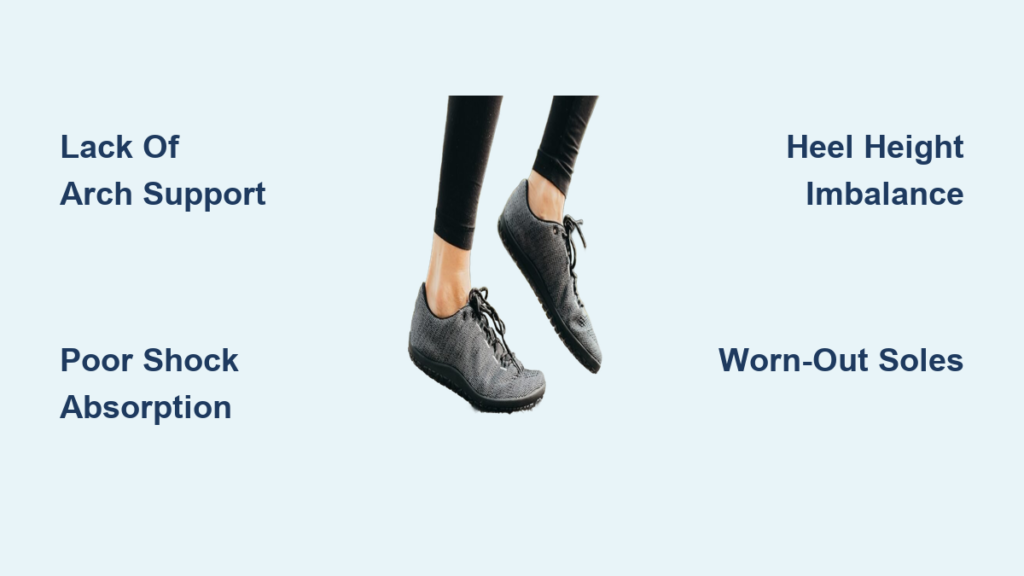
You slip into your favorite pair of flats, slide on flip-flops, or lace up worn-out sneakers without a second thought—until that familiar ache starts creeping up your lower back by mid-afternoon. What if the real source of your discomfort isn’t lifting incorrectly, sitting too long, or even a bad mattress—but the shoes on your feet? The truth is, shoes with no support cause back pain by triggering a chain reaction that begins in your soles and travels straight up your spine.
Every step you take sends shockwaves through your body. When your footwear lacks proper structure, your feet can’t maintain alignment, forcing your knees, hips, and spine to compensate. Over time, this leads to muscle strain, joint stress, and chronic lower back pain. Research confirms that unsupportive shoes—like flip-flops, ballet flats, high heels, or overly cushioned sneakers—disrupt natural biomechanics, increasing spinal load and altering posture and gait. In fact, studies show that improper footwear directly correlates with increased lumbar muscle activity and reduced postural stability.
In this guide, you’ll discover how flat, flimsy, or poorly fitted shoes contribute to back pain, the science behind the kinetic chain, warning signs to watch for, and practical steps to choose footwear that protects your spine. Whether you’re on your feet all day or just want to stop the aching, the solution starts from the ground up.
How Poor Footwear Disrupts Spinal Alignment

The Kinetic Chain: From Feet to Spine
Your body functions as a single, interconnected system called the kinetic chain, where movement at one joint affects every other joint above and below it. This chain starts at your feet and ends at your spine. When your foot collapses inward (overpronation) or rolls outward (supination) due to lack of support, it doesn’t just affect your ankles—it twists your knees, shifts your hips, tilts your pelvis, and ultimately misaligns your spine.
For example, overpronation often leads to an anterior pelvic tilt, which exaggerates the curve of your lower back (lumbar lordosis). This forces key muscles like the erector spinae and quadratus lumborum to work overtime to stabilize your torso. The result? Muscle fatigue, stiffness, and persistent lower back pain that worsens with activity.
Shock Transmission Without Cushioning
Shoes like flip-flops, hard-soled dress shoes, or worn-out sneakers absorb little to no impact. With every step, forces up to 3 times your body weight travel from the ground, through your feet, and directly into your spine. On hard surfaces like concrete, this unfiltered shock:
- Increases pressure on lumbar discs.
- Triggers inflammation in spinal joints.
- Causes cumulative microtrauma over time.
People who stand or walk for long periods in unsupportive shoes often report aching lower back pain that builds throughout the day—a telltale sign of impact overload due to poor shock absorption.
Heel Height Alters Posture and Spinal Curvature
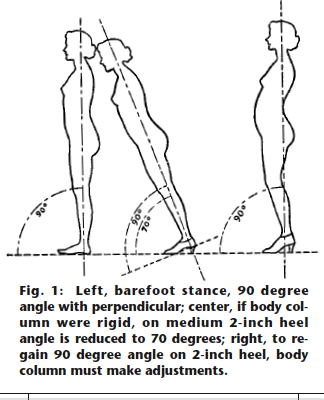
Heels over 1.5 to 2 inches shift your center of gravity forward, forcing your body to compensate by tilting the pelvis forward and arching the lower back excessively. This posture increases strain on the lumbar vertebrae and can even compress nerves, mimicking sciatica symptoms.
But it’s not just high heels—many running and walking shoes have a high heel-to-toe drop (12mm or more), which elevates the heel and promotes the same anterior pelvic tilt. Even if the shoe feels soft, the elevated heel changes spinal alignment, leading to long-term muscle imbalances and back strain.
Ill-Fitting Shoes Change Your Gait
Tight, narrow, or loose shoes interfere with natural foot motion. If your toes are cramped or your heel slips, you unconsciously alter your stride—gripping with your toes, shortening your steps, or favoring one side. These gait abnormalities can lead to:
- Pelvic obliquity (one hip higher than the other).
- Functional leg length discrepancy.
- Rotational stress on the sacroiliac (SI) joint.
The result? One-sided lower back pain that flares up depending on what you’re wearing.
Worn-Out Shoes Lose Structural Support
Even supportive shoes fail over time. After 300–500 miles of use, midsoles compress, arches collapse, and soles wear unevenly. Worn-out shoes no longer stabilize your feet, leading to progressive misalignment and recurring back pain. If your back pain started when your favorite sneakers got “comfortable,” it’s likely not comfort—it’s structural breakdown.
Common Shoe Types That Trigger Back Pain
Flip-Flops and Flat Sandals
These offer zero arch support and minimal cushioning. To keep them on, your toes grip with every step, tightening foot and calf muscles and altering your gait. Studies show flip-flop wearers take shorter, shuffling steps, reducing shock absorption and increasing spinal load. Long-term use is linked to chronic low back discomfort, especially in those who walk or stand for hours.
Ballet Flats and Rigid Dress Shoes
Flat, stiff, and narrow, ballet flats lack cushioning and arch support. Their hard soles transmit full impact to your spine, while tight toe boxes restrict natural foot motion. Women who wear flats daily often develop tight calves and weak foot muscles, contributing to poor posture and back strain. Combined with prolonged standing, these shoes are a common but overlooked cause of dull, persistent backaches.
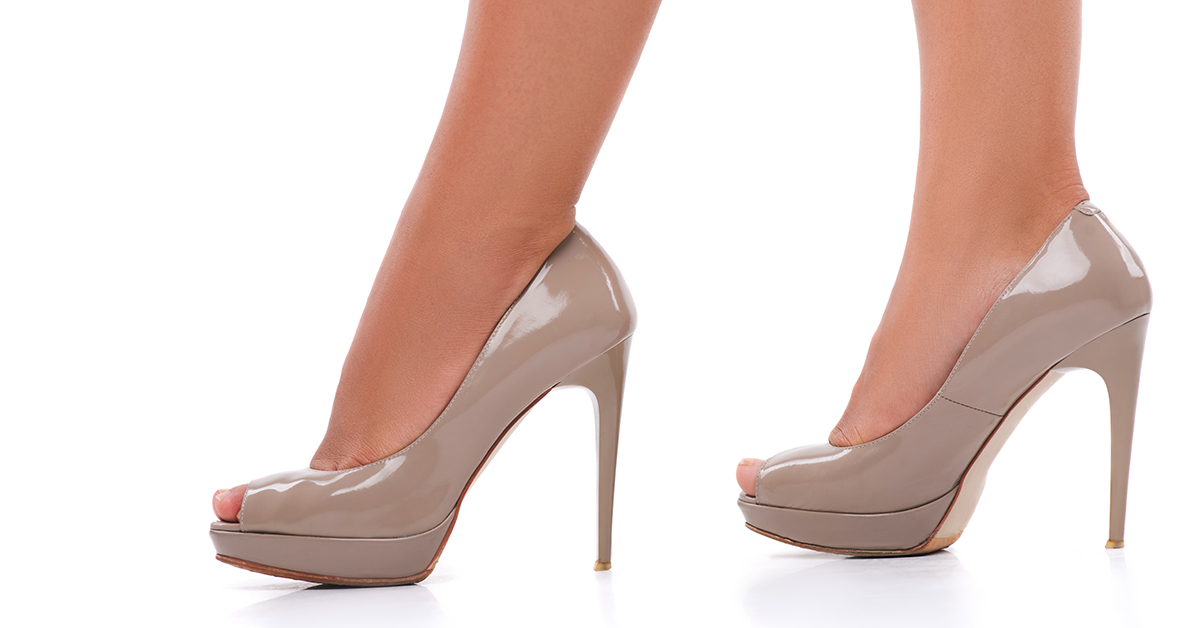
High Heels
Heels over 2 inches dramatically alter spinal alignment. The forward tilt of the pelvis increases lumbar lordosis, compressing spinal joints and discs. Chronic wearers show higher rates of low back pain, SI joint dysfunction, and muscle imbalances. Even short-term use can trigger acute flare-ups, especially after a long night out.
Minimalist and Zero-Drop Shoes
While designed to promote natural foot motion, these shoes aren’t right for everyone. Without a gradual transition, they can overload the Achilles tendon and plantar fascia, especially in people with tight calves or weak foot muscles. Some users report sudden low back pain when switching—often because the lack of heel elevation changes pelvic alignment, increasing lumbar flexion and strain.
Overly Cushioned Running Shoes
Paradoxically, too much cushioning can be a problem. Thick midsoles reduce proprioception—your brain’s awareness of foot position—leading to unstable landings and increased postural sway. Users with limited ankle mobility or tight hips may find these shoes trigger back pain due to the elevated heel and altered gait. One common report: “I feel taller and off-balance, and my lower back tightens within hours.”
How to Choose Back-Friendly Footwear
Arch Support That Matches Your Foot Type
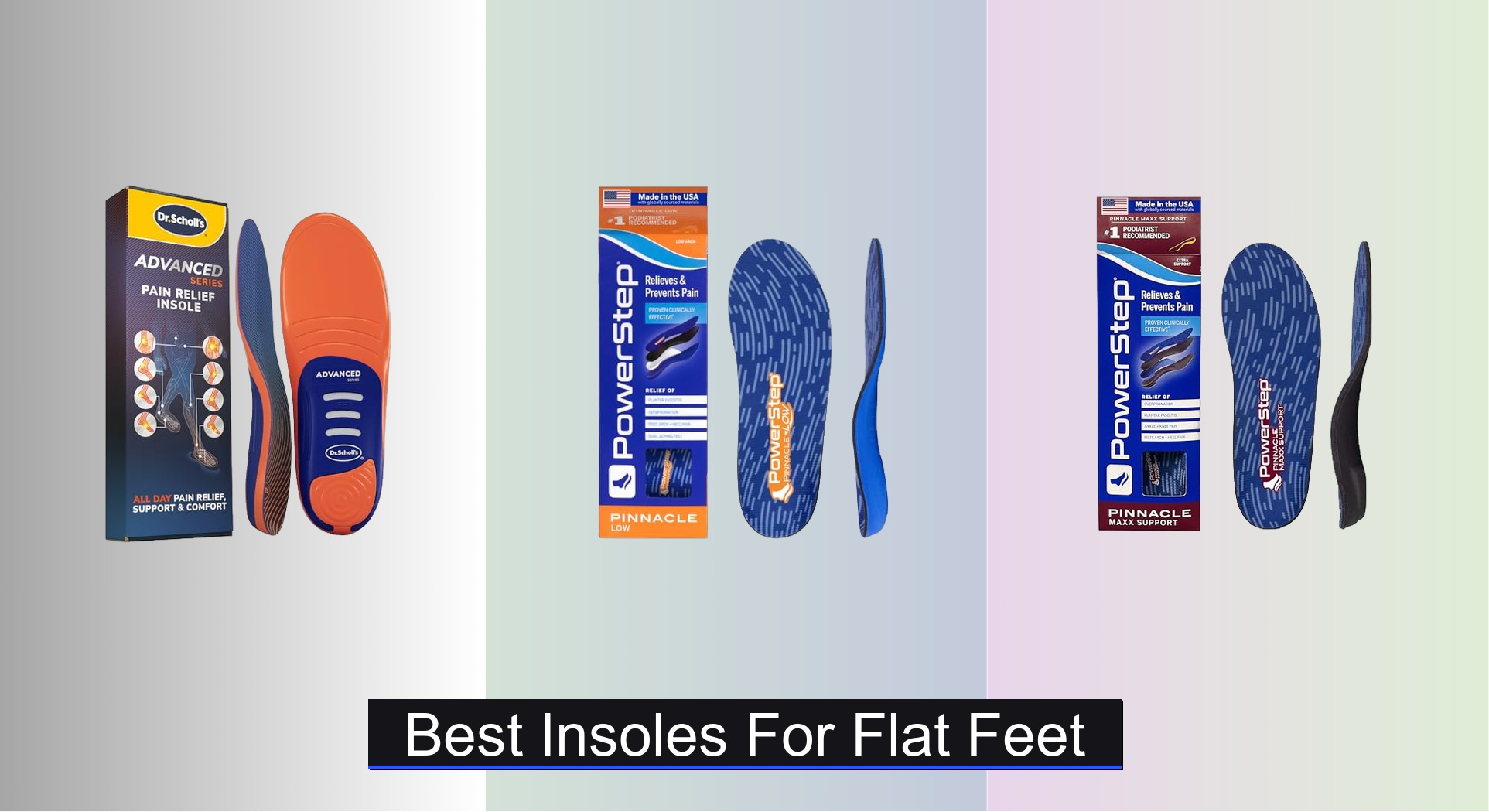
Your arch—flat, neutral, or high—determines the support you need. Unsupported flat feet overpronate; high-arched feet underpronate (supinate), both leading to back pain. Look for shoes with structured arch support that matches your foot shape. If off-the-shelf models don’t fit, consider custom orthotics after a gait analysis.
Moderate Cushioning for Impact Protection
Avoid both extremes: no cushioning (like flip-flops) and excessive cushioning (like superfoam runners). Opt for moderate midsole thickness that absorbs impact without dulling foot feedback. This balance protects joints while maintaining stability and natural gait.
Heel-to-Toe Drop of 10–12mm
A slight heel elevation helps maintain a neutral pelvic position. Drops under 4mm (zero-drop) may strain the Achilles in unadapted users, while drops over 12mm promote anterior tilt and back strain. If transitioning from high heels, don’t switch abruptly—gradual adaptation prevents pain.
Firm Midsole and Stable Base
Press the sole with your thumb. If it collapses easily, it won’t support your weight. A firm midsole resists torsion and keeps your foot aligned. Look for a rigid heel counter to prevent slippage and rearfoot wobble.
Wide Toe Box for Natural Motion
Your toes need room to splay during push-off. Narrow shoes restrict this, forcing hip and spine adjustments. Choose shoes with a wide forefoot to allow natural foot function and improve balance.
Proper Fit: No Pinching, No Slipping
Your shoe should:
– Have ½ inch of space between your longest toe and the tip.
– Feel snug in the heel, with no slippage.
– Have no pressure points on the sides or top.
Ill-fitting shoes cause micro-movements that destabilize your gait and strain your back over time.
Warning Signs Your Shoes Are Causing Back Pain
- Pain worsens with standing or walking and improves when barefoot or in supportive shoes.
- Instant relief when switching to orthopedic or supportive footwear.
- One-sided back pain linked to uneven shoe wear.
- Foot or knee pain precedes back pain—a sign the kinetic chain is disrupted.
- Visible wear patterns: Inner heel wear (overpronation), outer edge wear (supination), or flat midsoles (lost cushioning).
Replace shoes showing these signs, even if they still look “usable.”
Prevent and Fix Shoe-Related Back Pain
Choose Activity-Specific Footwear
- Walking/Running: Supportive sneakers with moderate cushioning.
- Work/All-Day Wear: Low-heeled, arch-supported shoes with wide toe boxes.
- High Heels: Limit to under 1.5 inches and wear briefly.
Replace Shoes Regularly
- Athletic shoes: Every 300–500 miles or 6–12 months.
- Daily wear shoes: When soles are worn or cushioning feels flat.
Use Orthotics When Needed
Over-the-counter or custom orthotics correct biomechanical flaws:
– Flat feet: Need arch support.
– High arches: Need extra cushioning.
– Leg length discrepancy: Can be balanced with a heel lift.
Strengthen Core and Foot Muscles
- Towel scrunches, calf raises, planks, and bird-dogs improve stability and reduce back strain.
Stretch Tight Muscles
- Calf, hip flexor, and hamstring stretches counteract posture distortions from poor footwear.
Transition Shoes Gradually
Switching shoe types should take 2–4 weeks. Start with 30 minutes a day, then increase. Sudden changes can trigger acute back pain.
Get a Gait Analysis
Visit a podiatrist, physical therapist, or specialty shoe store for a professional assessment. Video gait analysis can identify imbalances and recommend the best shoes or orthotics.
When to See a Professional
Seek help if:
– Pain persists despite better shoes.
– You experience numbness, tingling, or radiating leg pain (possible nerve issue).
– You have foot deformities or past injuries.
– You limp or favor one leg.
A professional can provide custom orthotics, gait training, and targeted exercises.
Final Takeaways: Fix Your Foundation
Shoes with no support cause back pain by disrupting the kinetic chain, altering posture, and increasing spinal load. From flip-flops to worn-out sneakers, unsupportive footwear forces your body to compensate—often at the cost of your lower back.
The fix starts with awareness: your feet are the foundation of your spine. Choosing supportive, well-fitted shoes with proper arch support, moderate cushioning, and a stable base can prevent or even reverse back pain.
Replace shoes regularly, strengthen your core and feet, stretch tight muscles, and transition new footwear gradually. For stubborn pain, seek a gait analysis or custom orthotics.
Remember: back pain isn’t always a back problem. Often, the solution begins at ground level. By supporting your feet, you support your entire body—step after step.